Friday, July 5, 2019

Churchill Falls - hydroelectric power station


Churchill Falls hydropower

The machine hall of the power facility at Churchill Falls was hollowed out of solid rock, close to 1,000 ft (300 m) underground. Its final proportions are huge: in height it equals a 15-story building, its length is three times that of a football field. At the time, the project was the largest civil engineering project ever undertaken in North America.
Churchill Falls, Labrador, ca. 1969
Churchill Falls - 2008
wow!


Google Aerial View of the area View >

Video

nice animated infographics!

Transmission Lines

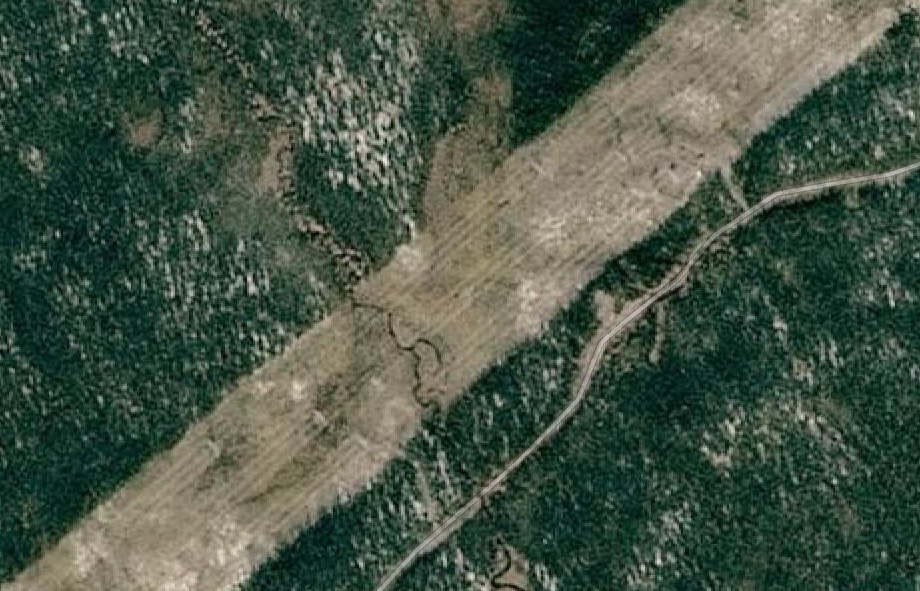
I first found about about Churchill Falls when a couple of years back I was panning a Google Map in Satellite view and noted this strange diagonal line all across Labrador. It was bizarre - what could it be? I traced it northward and found the Town and hydroelectric plant and became fascinated.

Google Street View of the huge swath of the  transmission lines
View >
Google Close Up Aerial View
View >
The red line indicates the transmission lines wide swath across Labrador


Crater - René-Levasseur Island

Did you know?

The Manicouagan Reservoir and René-Levasseur Island are sometimes called the "eye of Quebec".

The geological structure was formed by the impact of a meteorite 214 million years ago. It is the fifth most powerful known impact that Earth has seen! The shock wave and air blast from the impact severely damaged and killed plants and animals out to distances of approximately 350 miles. Some scientists believe that this impact may have been responsible for a mass extinction associated with the loss of roughly 60% of all species.

Google Maps
https://www.google.com/maps/@51.455296,-68.5609973,126744m/data=!3m1!1e3

Manicouagan Impact Crater from Space: by @NASA, 
International Space Station Expedition 59

Manicouagan Impact Structure

The force of the impact exhumed and liquefied rocks down to as deep as 9 kilometers.  The heat released was so intense that it took between 1,600 and 5,000 years before the melted rocks cooled.
http://craterexplorer.ca/manicouagan-impact-structure/


Tuesday, June 4, 2019

Alcohol-Related Maps

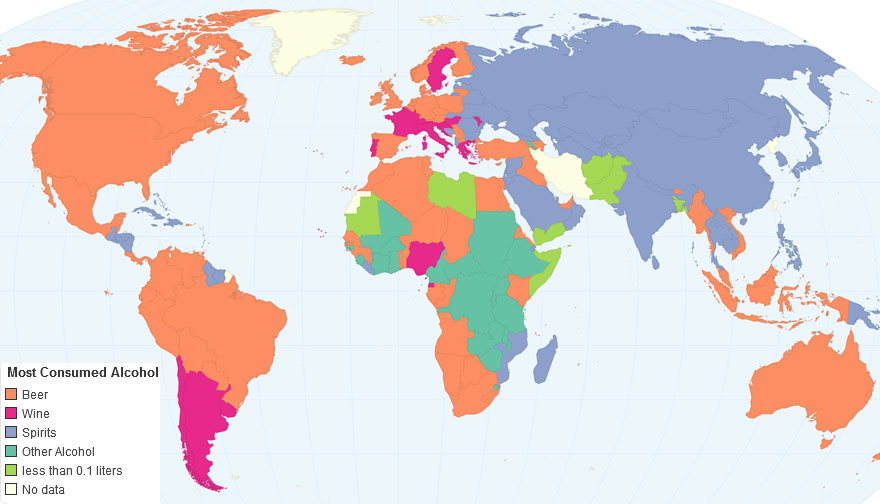
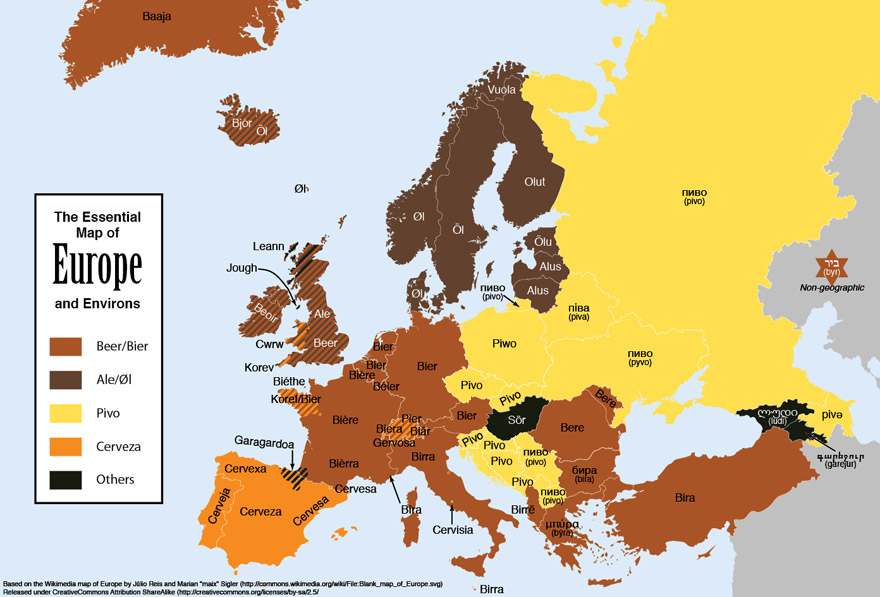
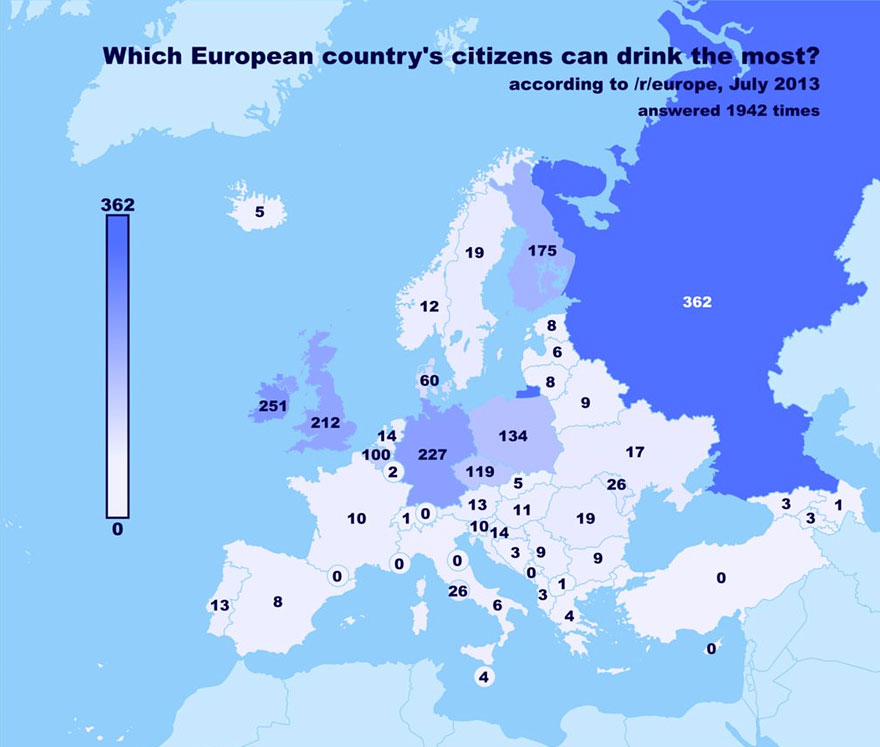
Here's an interesting collection of alcohol-related maps....


Most Consumed Alcoholic Beverage by Country


Beer Names in Different European Languages


European Citizens Who Drink the Most


The Countries That Drink The Most - Business Insider


Alcohol Choice by State According to Twitter Users)

Further Info

Legal drinking age

Friday, May 3, 2019

The Growth of Railroads in the Capital District

Charting the history and explosive growth in this area through a chronological series of maps...

visit page >


Historic Map Overlays


What a great way to compare yesteryear history with today: Historic Map Overlays!


-Click on any map visit the page with the interactive map overlay-

Jersey City Rail Yards - Then and Now

Newport, NJ, now a a white-collar corporate enclave of high rises, chain stores and franchise restaurants was born on the ashes of former massive railroad yards. It’s a fascinating story of decline and revival...

Mystery Ruins

Unraveling the mysteries of a forgotten trolley bridge...
scroll to bottom of linked page

Sacandaga - Before and After

Flood On The Tracks - Last Days of the Gloversville And Northville. This interactive overlay  is  art of the Flood on the Tracks Presentation


Historic Maps (part one)

Old maps are fascinating... you can learn so much from them. Here are a few to enjoy...

1776 Map - New York

Provinces of New York, and New Jersey; with part of "Pensilvania" (note the early Dutch spelling)
Link to map

1895 - N.Y. land grants, patents, purchases 

David Rumsey Map Collection. Link to map 

1856 Greene County Map

Before the trains... before the Kaaterskill Hotel... the Catskill Mountain House and the twisting stagecoach road to get up there... Link to Map

Saturday, January 12, 2019

The Hammond Organ

Ya gotta love Wikipedia -This is fascinating!!

Hammond Organ

The Hammond organ was, invented by Laurens Hammond and John M. Hanert and first manufactured in 1935. Hammond organs generated sound by creating an electric current from rotating a metal tonewheel near an electromagnetic pickup.
  • Hammond was inspired to create the tonewheel or "phonic wheel" by listening to the moving gears of his electric clocks and the tones produced by them.
  • For all its subsequent success with professional musicians, the original company did not target its products at that market, principally because Hammond did not think enough money was in it. 
  • The Hammond Organ Company produced an estimated two million instruments in its lifetime; these have been described as "probably the most successful electronic organs ever made".

Battle of the Organs!

In 1936, the Federal Trade Commission (FTC) filed a complaint claiming that the Hammond Company made "false and misleading". Auditory tests that pitted a Hammond costing about $2600 against a $75,000 Skinner pipe organ in the University of Chicago Rockefeller Chapel.[During the auditory tests, sustained tones and excerpts from musical works were played on the electric and pipe organs while a group of musicians and laymen attempted to distinguish between the instruments.

Early customers of the Hammond included Albert Schweitzer, Henry Ford, Eleanor Roosevelt and George Gershwin.

Read about the shortened pedal board, waterfall key, harmonic percussion and the FTC tests!
https://en.m.wikipedia.org/wiki/Hammond_organ

Tone Wheels

A tonewheel or tone wheel is a simple electromechanical apparatus for generating electric musical notes in electromechanical organ instrument. Details on the mechanics/electronics the make it work:
https://en.wikipedia.org/wiki/Tonewheel

Laurens Hammond

Laurens Hammond (1895 – 1973), was an American engineer and inventor. His inventions include, most famously, the Hammond organ, the Hammond clock, and the world's first polyphonic musical synthesizer, the Novachord.

His first patent, in 1912, was for a barometer that could sell for one dollar. In 1922, heinvented the Teleview system of shutter glasses in association with 3-D films. Hammond's work on the synchronous motor led him in 1928 to set up the Hammond Clock Company, with six workers, above a grocery store in Chicago. Demand was high and the business soon grew into a large factory. He was responsible for a number of other inventions, such as an electric bridge table.

During World War II, Hammond helped design guided missile control systems, light-sensing devices for bomb guidance, glide-bomb controls, and a new type of gyroscope. The glide bomb was the forerunner of today's guided missile. During his life he held 110 patents!
https://en.m.wikipedia.org/wiki/Laurens_Hammond
See also The Forgotten Genius of Laurens Hammond


About the Telharmonium

  • The Telharmonium (also known as the Dynamophone) was an early electrical organ, developed by Thaddeus Cahill circa 1896 and patented way back in 1897… It weighed almost 200 tons! 
  • Performances in New York City (some at "Telharmonic Hall"-39th and Broadway) were well received by the public in 1906, and the performer would sit at a console (see picture) to control the instrument. 
Telharmonium - 1897
  • The actual mechanism of the instrument itself was so large it occupied an entire room — wires from the controlling console were fed discreetly through holes in the floor of an auditorium into the instrument room itself, which was housed in the basement beneath the concert hall.