I just finished reading the dense but well-written book on the history of the Caucasus:
The Ghost of Freedom: A History of the Caucasus by Charles King
It is a fascinating yet complicated region and truthfully--because of the multitudes of languages, ethnic groups and ever-shfting allegiances--the book was hard to follow. Nevertheless I still would recommended it. The region has been cast as an untamed exotic place, filled with mysterious intrigue and dangerous allure and its history justifies that description.
Maps--as always-will help visually simplify the vast variety of diversity that gives this region its unique character.
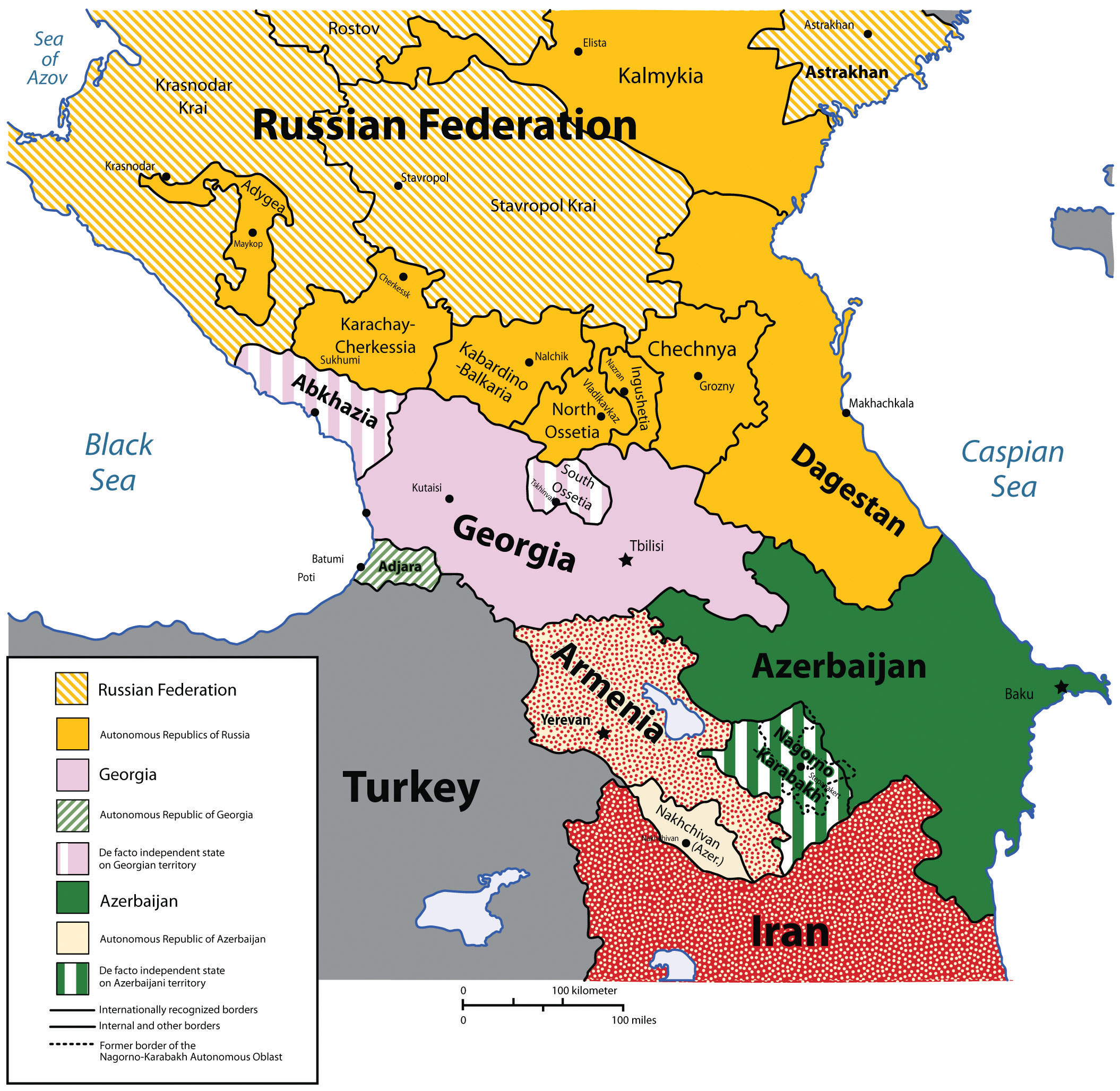
Political
The Caucasus is one of the most culturally complex and linguistically diverse parts of the world, often noted for its geopolitical intricacy and intractable conflicts. Despite the importance of the Caucasus, the region is often overlooked in the international media. When noticed, it is usually portrayed as a remote and violence-plagued place, a jumble of mountains situated at the periphery of some other region: the Russian extreme south, the Middle Eastern extreme north, or the European extreme southeast.
Great Overview Article >
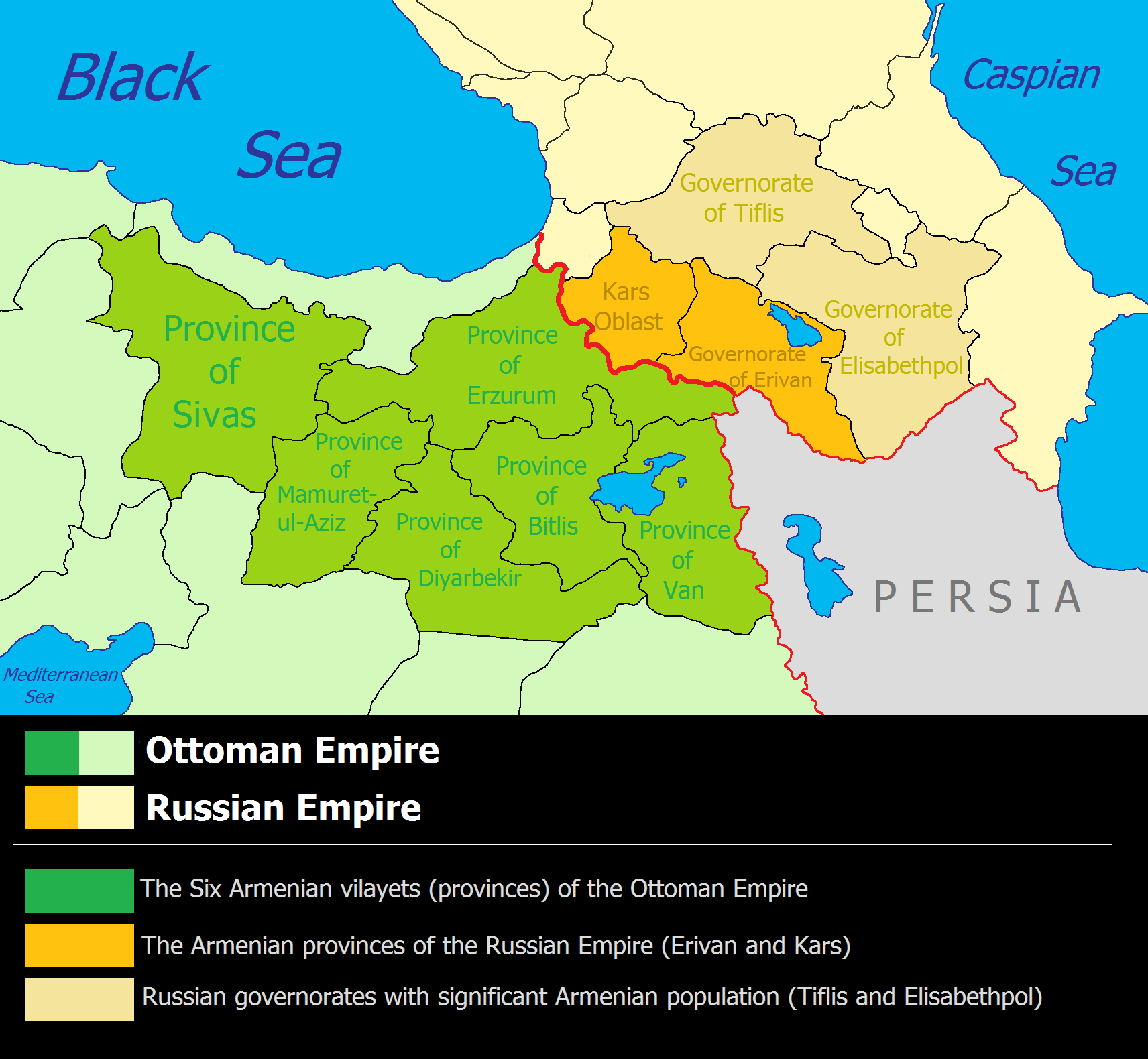 |
| Ottoman, Persian and Russian Empires |
Population and Migration
 |
| Population migration and displacement in the Southern Caucasus, 1988-200 |
Elevation
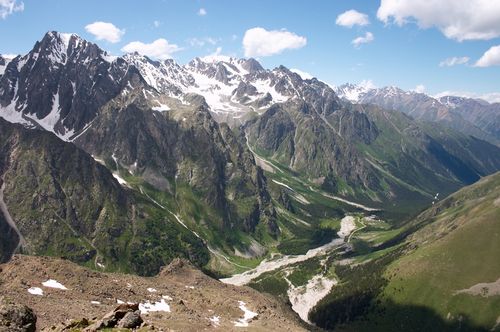
The Caucasus Mountains formed largely as the result of a tectonic plate collision between the Arabian plate moving northwards with respect to the Eurasian plate and the entire region is regularly subjected to strong earthquakes. The Caucasus Mountains are known for the high amount of snowfall: snow cover in several regions may reach 5 metres (16 ft) and Europe's highest mountain--Mount Elbrus 5,642 m (18,510 ft)-- is located in the Caucasus Mountains.
Ethnic Plurality
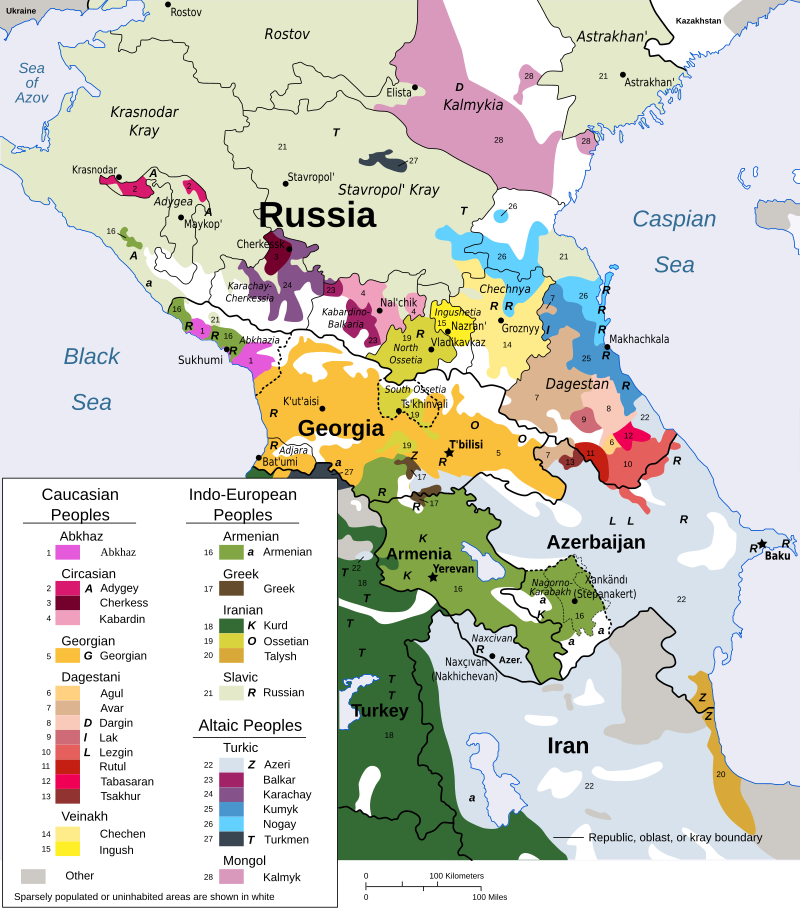
The region has many different languages and language families. There are more than 50 ethnic groups living in the region.
Language Families
The Caucasus is one of the most linguistically and culturally diverse regions on Earth.
Religion
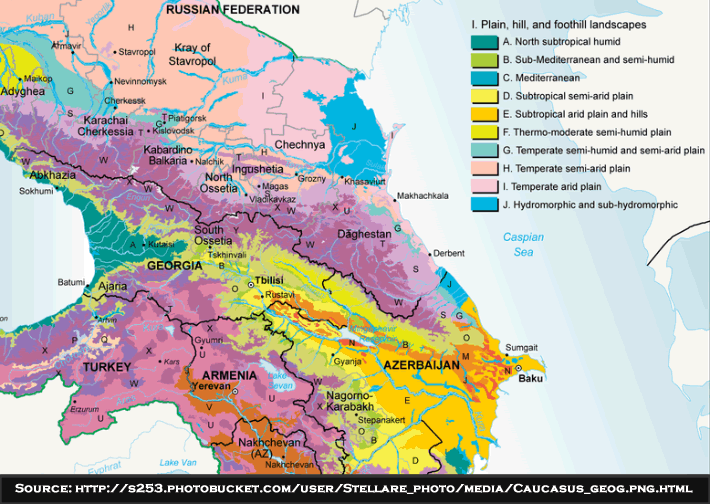
Climate
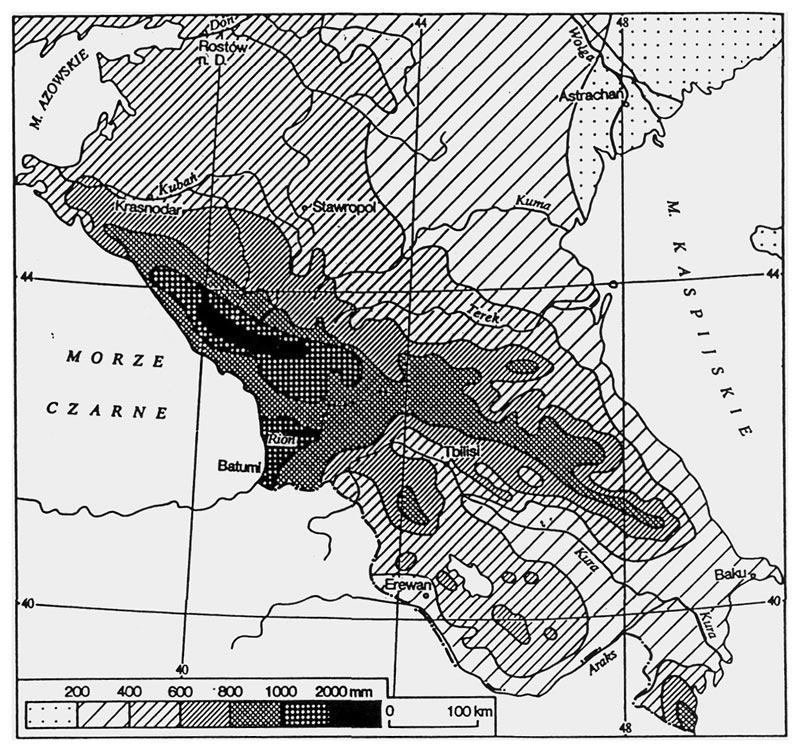
The Caucasus is an area of great ecological importance. The region is included in the list of 34 world biodiversity hotspots. It harbors some 6400 species of higher plants, 1600 of which are endemic to the region.
 |
| Rainfall |
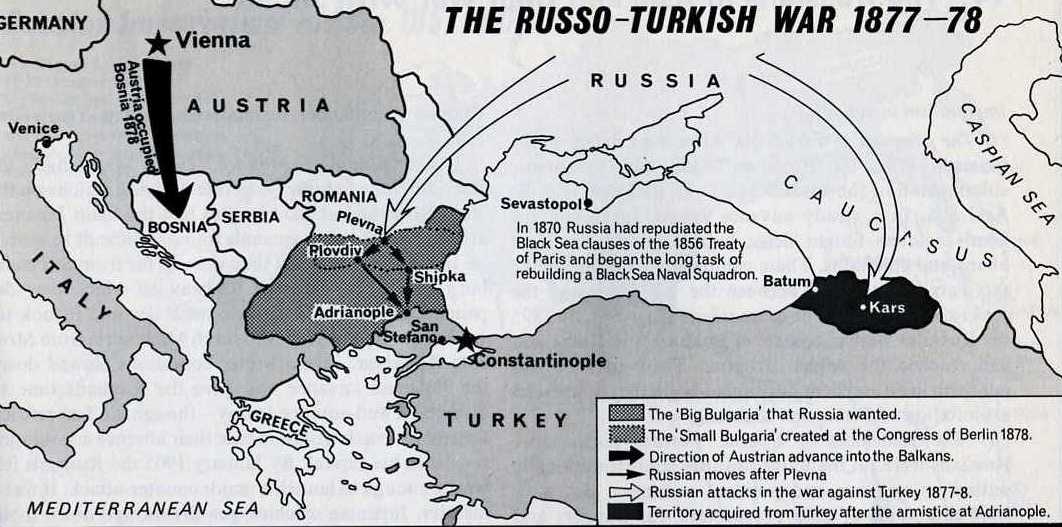
Wars
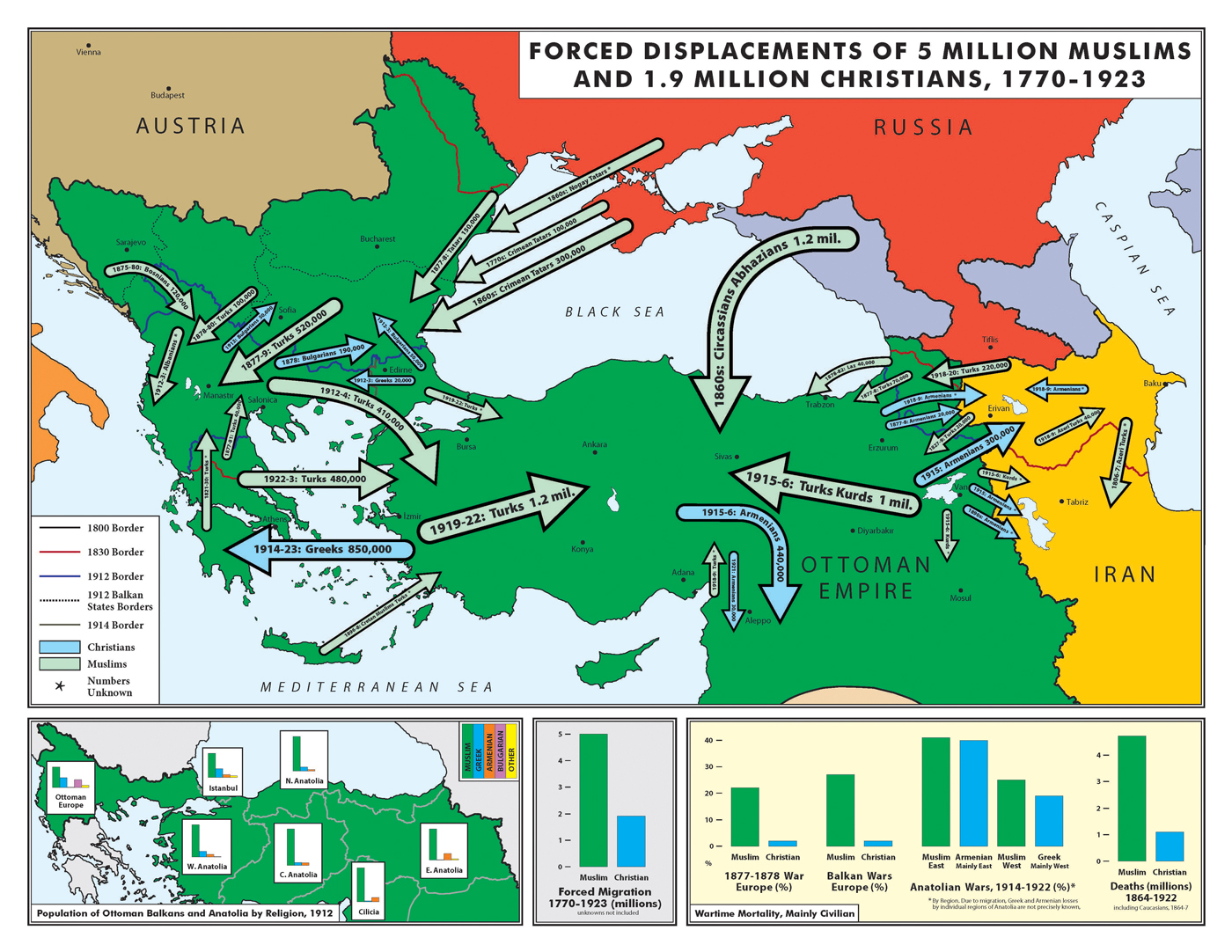
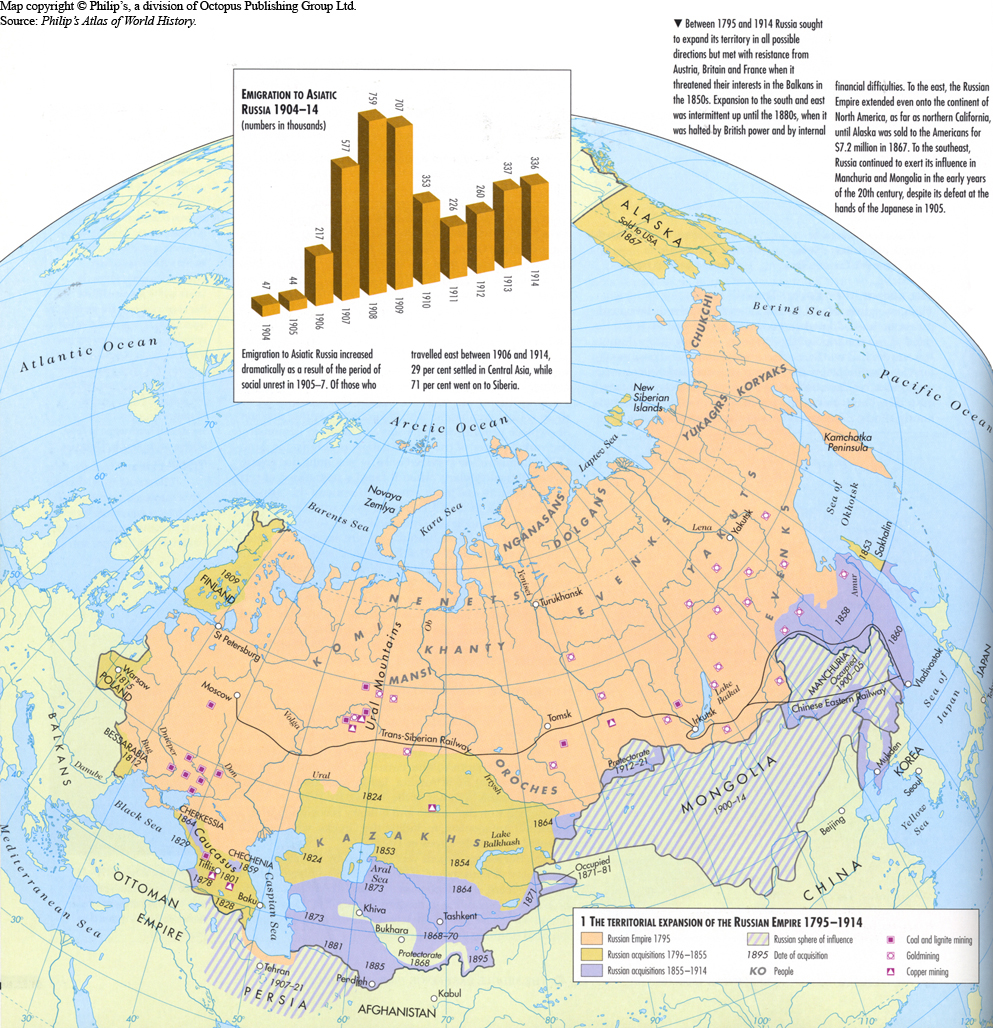
Instability in the North Caucasus has its roots in centuries of imperial conquest and local resistance. Cossacks began settling the region as agents of Russian expansion in the late eighteenth century, and the Russian Empire waged the nearly half-century Caucasian War from 1817 to 1864. A seemingly never-ending saga of turmoil, the region was a hotbed of dispute between the Ottoman, Persian and Russia Empires.
(Extensive Map Library)
Lastly, Google “
Caucasus At War” for much more in-depth coverage of this subject.
Part Two will be about the lesser known ethnic cleansings and subsequent diasporas in the Caucasus...




.png)