Showing posts with label Russian Empire. Show all posts

Monday, October 17, 2022

The Russian Empire

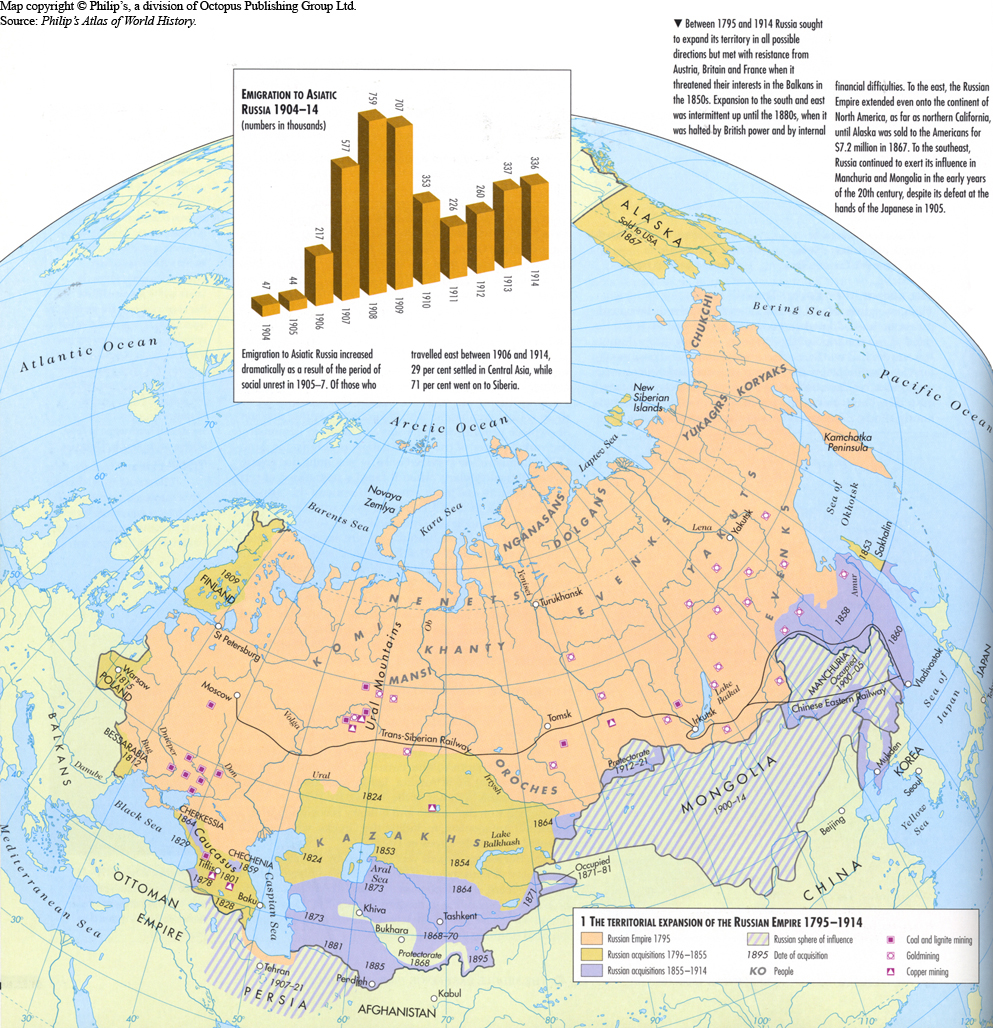
The Russian Empire spanned Eurasia from 1721 to 1917 and also held colonies in North America between 1799 and 1867. Covering an area of approximately 8,800,000 square miles, it remains the third-largest empire in history, surpassed only by the British Empire and the Mongol Empire.

At the beginning of the 19th century, the territory of the Russian Empire extended from the Arctic Ocean in the north to the Black Sea in the south, and from the Baltic Sea in the west to Alaska, Hawaii, and California in the east. By the end of the 19th century, it had expanded its control over most of Central Asia and parts of Northeast Asia.

Following Russia's role in defeating Napoleonic France, the Russian Empire played a leading political role in the next century, although its retention of serfdom precluded economic progress to any significant degree. As Western European economic growth accelerated during the Industrial Revolution, Russia began to lag ever farther behind, creating new weaknesses for the Empire seeking to play a role as a great power. 

Growth of the Russian Empire

Expansion of Russia, 1300–1796
Expansion of Russia, 1462-1796
Expansion of the Russian Empire, 1795-1914
Russian penetration of Central Asia
Russian expansion in Asia
(1533 - 1894)

Friday, July 3, 2015

Caucasus Wars and Forced Migrations (Caucasus Part Two)

Caucasian War

Russian Empire's conquest of the Caucasus lasted approximately 101 years. The Caucasian War (1817–1864) was an invasion of the Caucasus by the Russian Empire which resulted in Russia's annexation of the areas of the North Caucasus, and the ethnic cleansing of Circassians.  It consisted of a series of military actions waged by Russia against territories and tribal groups in Caucasia.
Caucasian War (Wikipedia) >

Russian control of the Georgian Military Highway in the center divided the Caucasian War into the Russo-Circassian War in the west and the Murid War in the east.

Russo-Circassian War

In the western or Russo-Circassian War the tribes did not unite and the war was very complex.

Articles 

Murid War

In the east. the tribes joined in the Caucasian Imamate, a military-theocratic state which held out for thirty years.
Murid War (Wikipedia) >


Russo-Persian Wars

Other territories of the Caucasus were incorporated into the Russian empire at various times in the 19th century as a result of Russian wars with Persia.


Russo-Persian Wars (Wikipedia) >


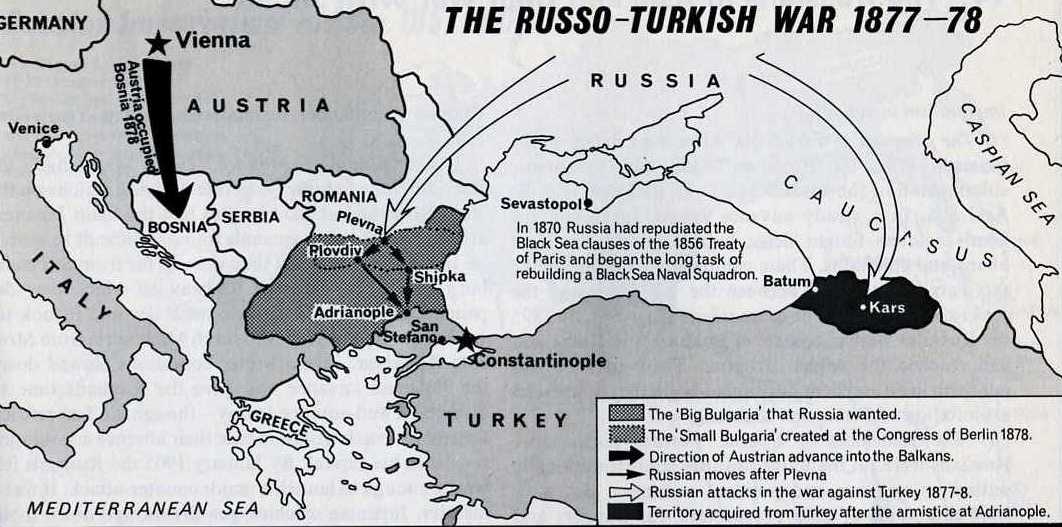
Russo-Turkish Wars


Russo-Turkish Wars (Wikipedia) >


Circassian Diaspora

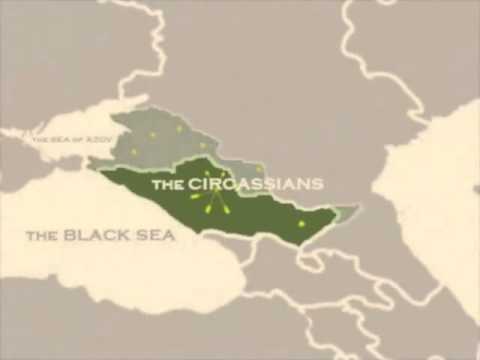
Circassia refers to a region the majority of whose inhabitants before 1860s were the Adygey (Adyghey, Adyghe) ethnic group, known to the West as Circassian.

The Unrepresented Nations and Peoples Organization estimates that there are as many as 3.7 million "ethnic Circassians" in the diaspora outside the Circassian republics (meaning that only one in seven "ethnic Circassians" lives in the homeland).
Circassia
1821–1822  and 1863–1864
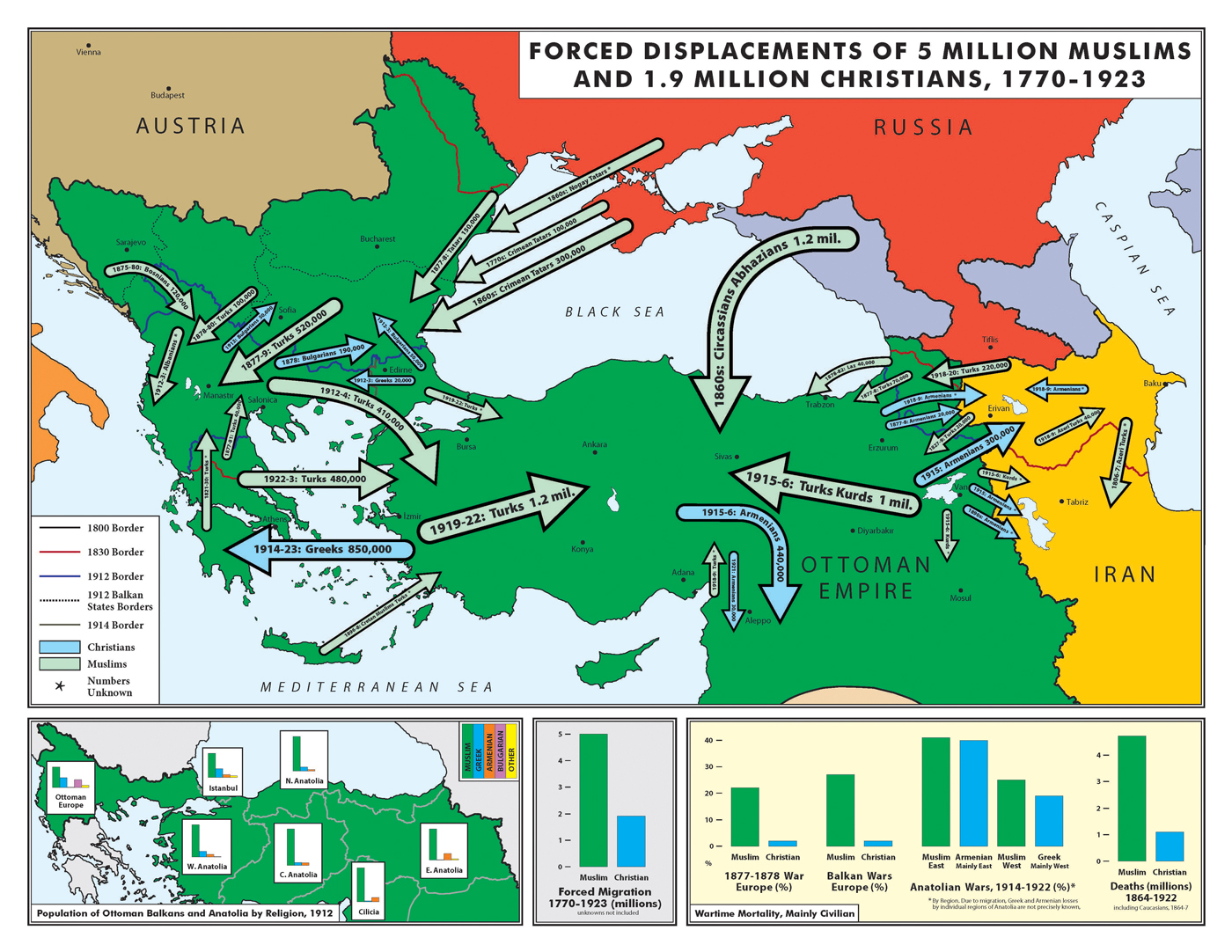
The Caucasian War ended with the signing of loyalty oaths by Circassian leaders on 2 June 1864. Thereupon, Russia undertook the expulsion of the entire indigenous Circassian population, herding them to Black Sea ports for deportation to neighboring Anatolia.

Over the course of hundreds of raids the Russians drove the Circassians from their homeland and deported them to the Ottoman Empire. At least 600,000 people lost their lives to massacre, starvation, and the elements while hundreds of thousands more were forced to leave their homeland. By 1864, three-fourths of the population was annihilated, and the Circassians had become one of the first stateless peoples in modern history.

Articles

Armenia and the Armenian Genocide

Armenia
In the first century BC the Kingdom of Armenia reached its height under Tigranes the Great. Armenia became the first state in the world to adopt Christianity as its official religion. Armenians have their own unique alphabet, which was invented by Mesrop Mashtots in 405 AD.

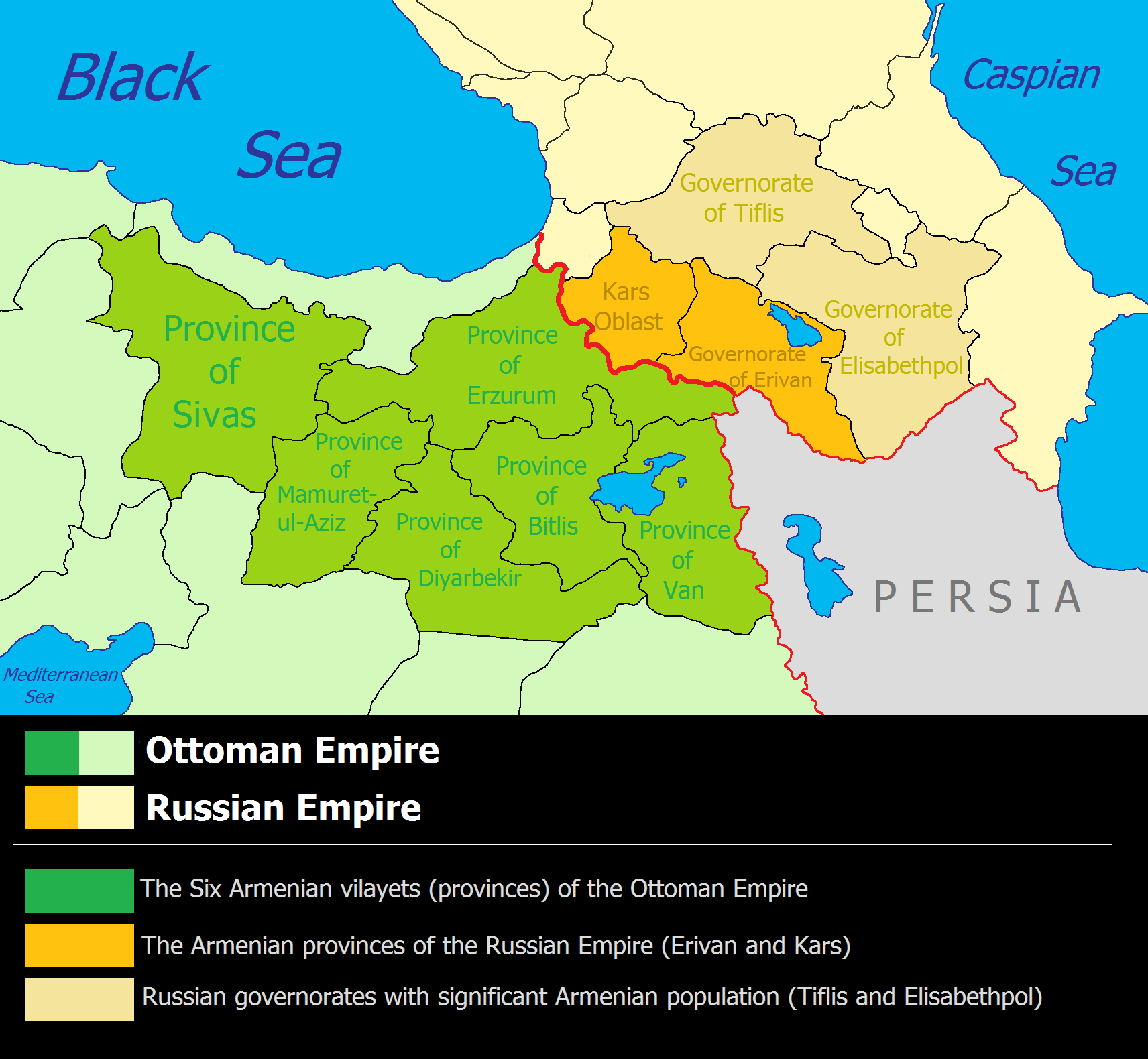
Between the 16th and first half of the 19th century, the traditional Armenian homeland which stretched in to much of western Anatolia came under rule of the rivaling Ottoman and successive Iranian Empires, passing between the two over the centuries. By the mid 19th century, Eastern Armenia had been conquered by Russia from Qajar Iran, while most of the western parts of the traditional Armenian homeland still remained under Ottoman rule.

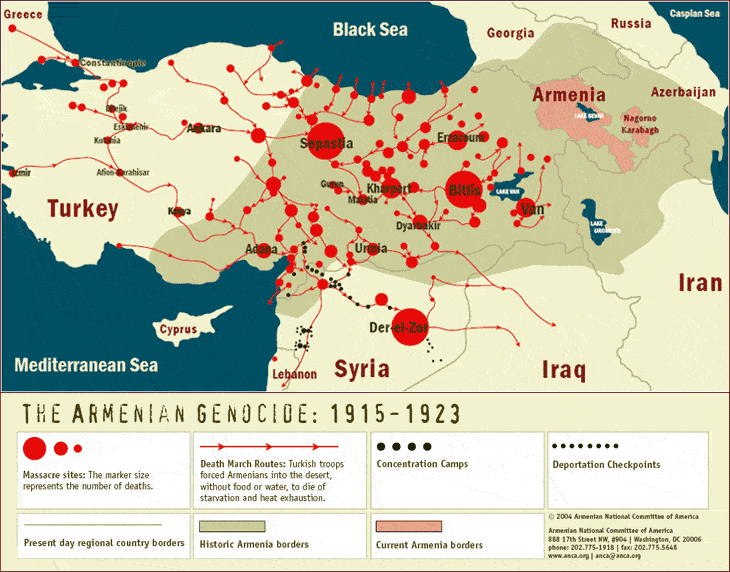
Armenian Genocide
The Destruction of the Ottoman Armenian population took place during and after World War I and was implemented in two phases: the wholesale killing of the able-bodied male population through massacre and forced labor, and the deportation of women, children, the elderly and infirm on death marches to the Syrian Desert.[The total number of people killed as a result has been estimated to range from 600,000 to 1,500,000.

Current Population Shifts

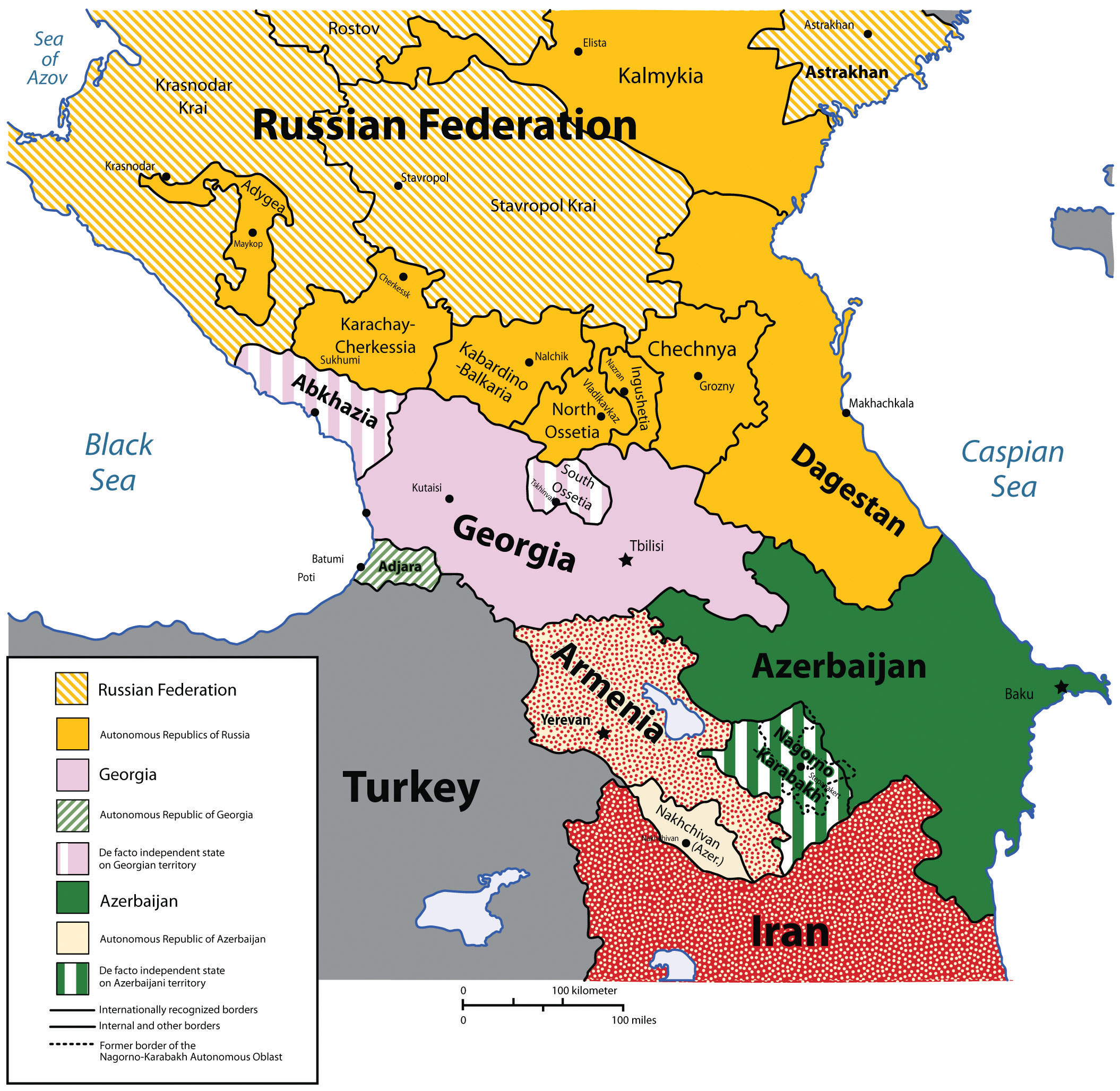
Following the wider patterns of most states emerging from the collapse of the Soviet Union, the three main countries in this region (Armenia, Azerbaijan and Georgia) saw patterns of mass emigration in the 1990s. Ethnic tensions and the constant escalation of conflicts in the region has created numerous groups of Internally Displaced Persons (IDPs) and refugees.

Recommended Book

Atlas of the Ethno-Political History of the Caucasus Hardcover by Arthur Tsutsiev

Caucasus (Part One)

I just finished reading the dense but well-written book on the history of the Caucasus: The Ghost of Freedom: A History of the Caucasus by Charles King  
It is a fascinating yet complicated region and truthfully--because of the multitudes of languages, ethnic groups and ever-shfting allegiances--the book was hard to follow. Nevertheless I still would recommended it. The region has been cast as an untamed exotic place, filled with mysterious intrigue and dangerous allure and its history justifies that description.

Maps--as always-will help visually simplify the vast variety of diversity that gives this region its unique character.

Political

The Caucasus is one of the most culturally complex and linguistically diverse parts of the world, often noted for its geopolitical intricacy and intractable conflicts. Despite the importance of the Caucasus, the region is often overlooked in the international media. When noticed, it is usually portrayed as a remote and violence-plagued place, a jumble of mountains situated at the periphery of some other region: the Russian extreme south, the Middle Eastern extreme north, or the European extreme southeast. Great Overview Article > 
Ottoman, Persian and Russian Empires


Population and Migration

Population migration and displacement in the Southern Caucasus, 1988-200

Elevation

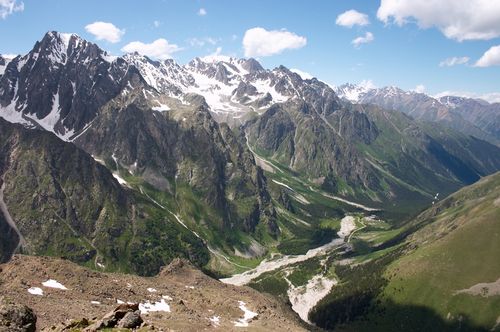
The Caucasus Mountains formed largely as the result of a tectonic plate collision between the Arabian plate moving northwards with respect to the Eurasian plate and the entire region is regularly subjected to strong earthquakes. The Caucasus Mountains are known for the high amount of snowfall: snow cover in several regions may reach 5 metres (16 ft) and Europe's highest mountain--Mount Elbrus 5,642 m (18,510 ft)-- is located in the Caucasus Mountains.

Article >

Wikipedia >


Ethnic Plurality

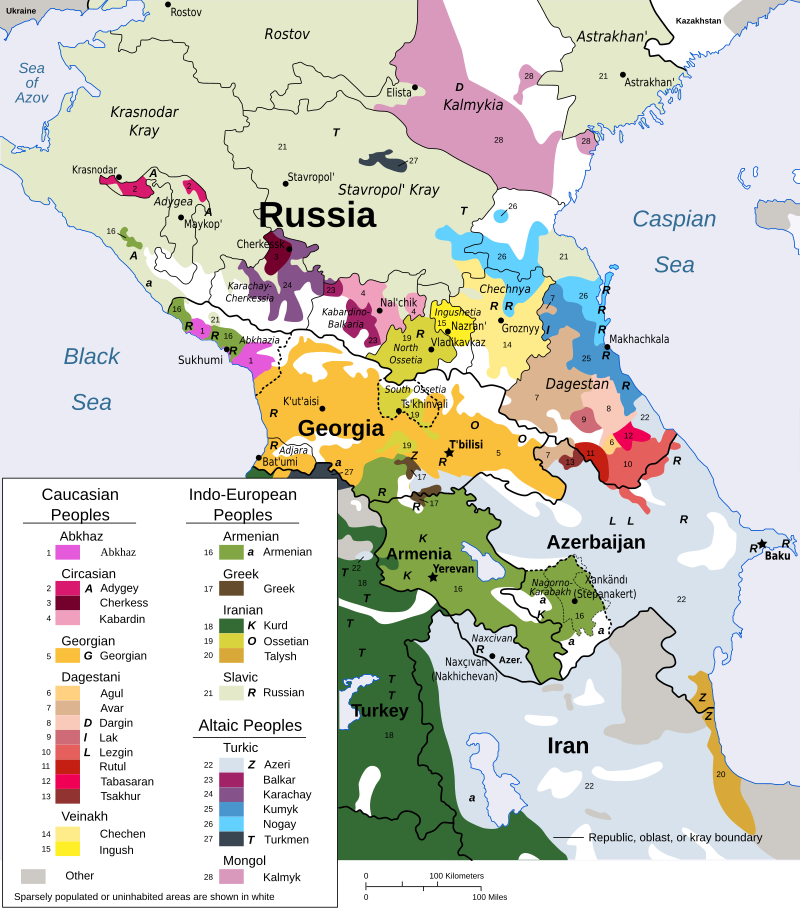
The region has many different languages and language families. There are more than 50 ethnic groups living in the region.

Article > 


Language Families

The Caucasus is one of the most linguistically and culturally diverse regions on Earth.

Article >


Religion


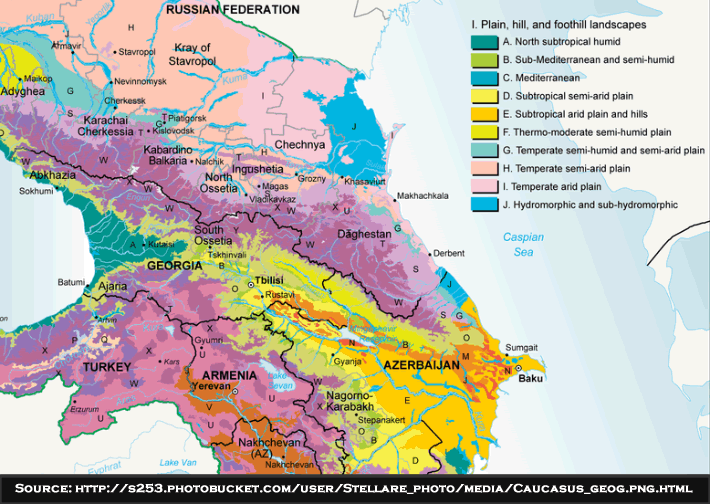
Climate

The Caucasus is an area of great ecological importance. The region is included in the list of 34 world biodiversity hotspots. It harbors some 6400 species of higher plants, 1600 of which are endemic to the region.
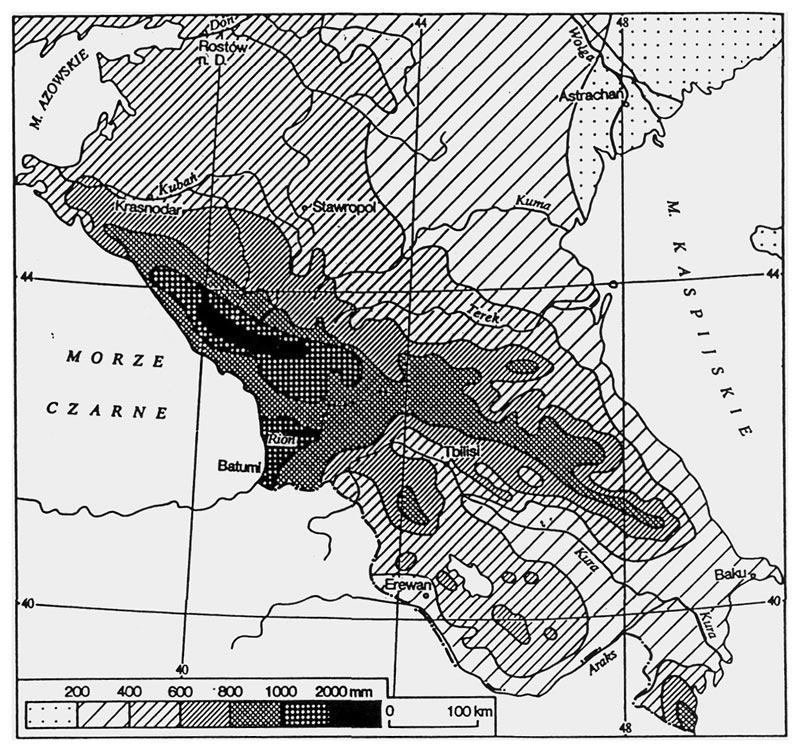
Rainfall


Wars

Instability in the North Caucasus has its roots in centuries of imperial conquest and local resistance. Cossacks began settling the region as agents of Russian expansion in the late eighteenth century, and the Russian Empire waged the nearly half-century Caucasian War from 1817 to 1864. A seemingly never-ending saga of turmoil, the region was a hotbed of dispute between the Ottoman, Persian and Russia Empires.

 Article >

(Extensive Map Library)

Lastly, Google “Caucasus At War” for much more in-depth coverage of this subject.

Part Two will be about the lesser known ethnic cleansings and subsequent diasporas in the Caucasus...