Showing posts with label Ancient Greece. Show all posts

Saturday, December 12, 2015

Greek History - The Hellenistic Period (Part Two)

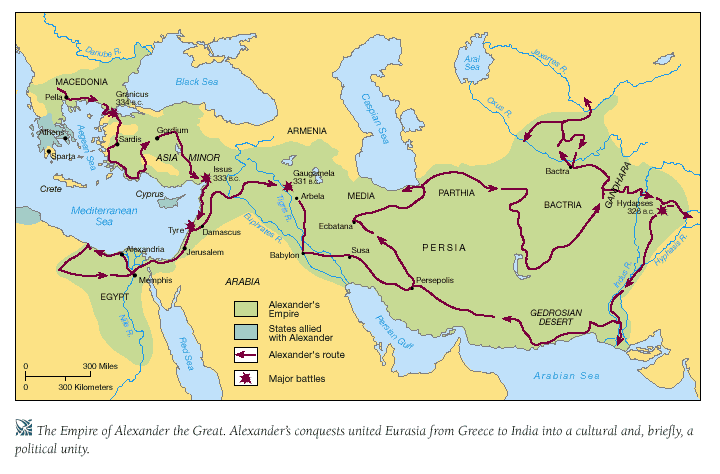
The Empire of Alexander The Great

Alexander the Great became the leader of the Greek kingdom of Macedonia and had built an empire that stretched from Greece all the way to India. That brief empire-building campaign changed the world: It spread Greek ideas and culture from the Eastern Mediterranean to Asia.
The Empire of Alexander The Great

“Hellenistic Period” (323 B.C. until 31 B.C)

Known as the “Hellenistic Period”, it lasted from the death of Alexander in 323 B.C. until 31 B.C., when Roman troops conquered the last of the territories that the Macedonian king had once ruled.

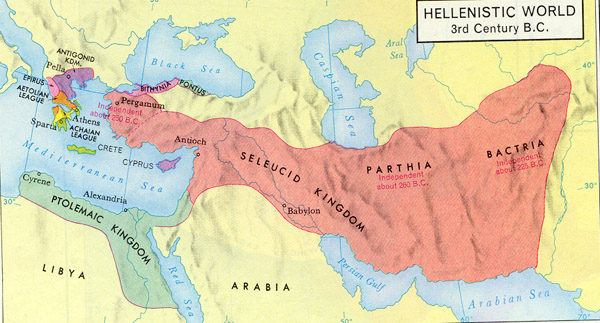
Following Alexander's death in 323 BC. His generals Ptolemy, Antigonus, Parmenion, Cassander, and Seleucus engaged in a bitter struggle to carve out personal kingdoms from Alexander's conquests. After 40 years of war, three major dynasties were settled on.
Alexander's Empire was divided amongst his generals

1 - Ptolemaic Empire

Ptolemy controlled Egypt and created a Ptolemaic dynasty that ruled Egypt until its absorption into the Roman Empire by Augustus in 30 B.C.
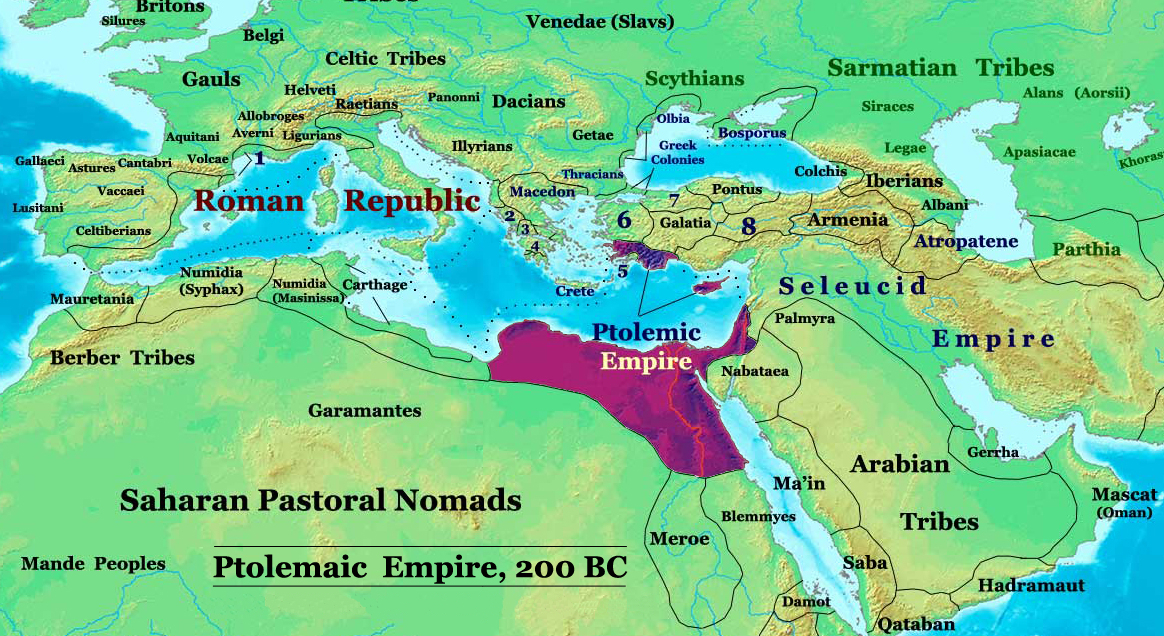
Ptolemaic Empire in 200 BC

2 - Seleucid Empire

Seleucus created in the Near East a large empire, sometimes stretching as far as Iran and even India.
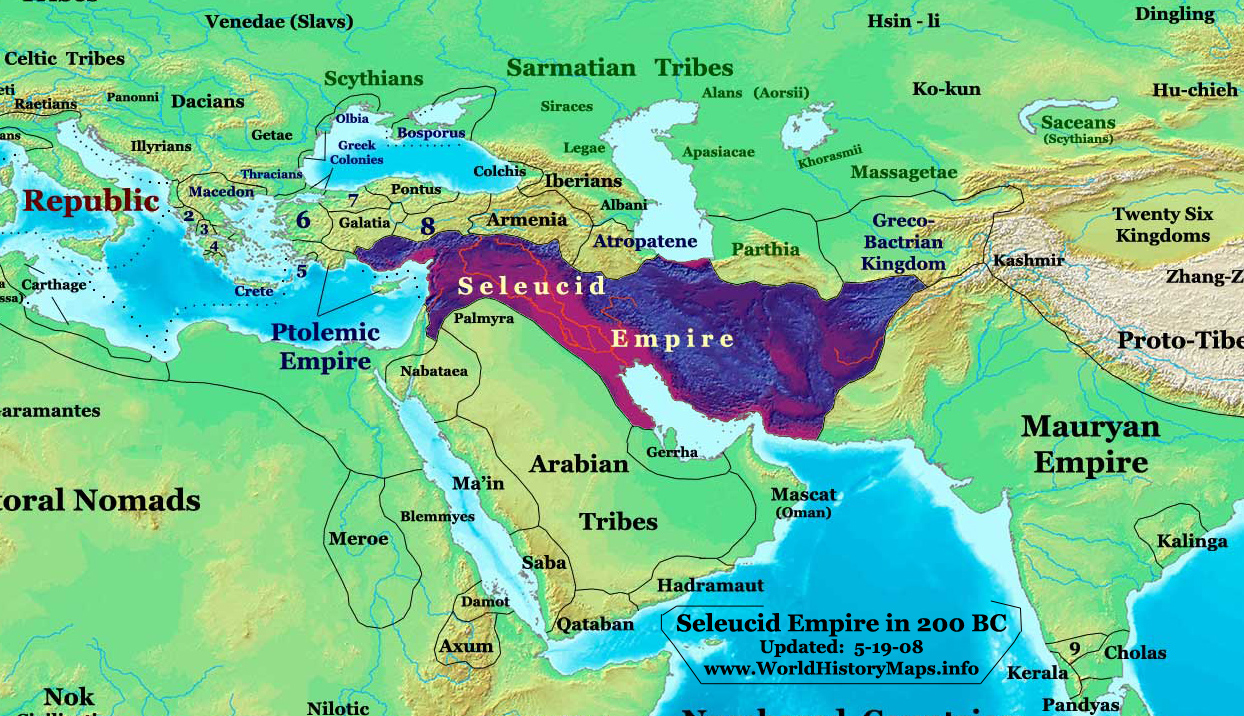
Seleucid Empire in 200 BC
(before expansion into Anatolia and Greece)

3 - Antigonid Empire

 Finally, in Macedon the Antigonid dynasty ruled the smallest division of Alexander's Empire and had the most troubles from the start. The first founder of the Antigonid Dynasty was Antigonas, who gained control of Asia Minor after Alexander’s death. He attempted to reunite the empire under his own rule and declared himself king, but he was defeated and killed in 301 BC.

After numerous battles with neighboring kingdoms and losses to Seleucus, the Antigonid Dynasty ended up hemorrhaging most of Asia Minor (Anatolia) and was considerably reduced in size.


Thursday, December 10, 2015

Visual Quick Study: Mycenaeans and Ancient Greece (Part One)

Beginnings - The Mycenaeans

The Mycenaeans were the first Greeks. The Mycenaean civilization thrived between 1650 and 1200 BC. The Mycenaeans were influenced by the earlier Minoan civilization, located on the island of Crete.

The catacalysmic eruption of Thera, which occurred around 1500 BC, resulted in the decline of the Minoan civilization of Crete. This turn of events gave the opportunity for the Mycenaeans to spread their influence throughout the Aegean. Around c. 1450 BC, they became the dominant power of the region. gaining control of Crete itself and colonizing several other Aegean islands reaching as far as Rhodes.
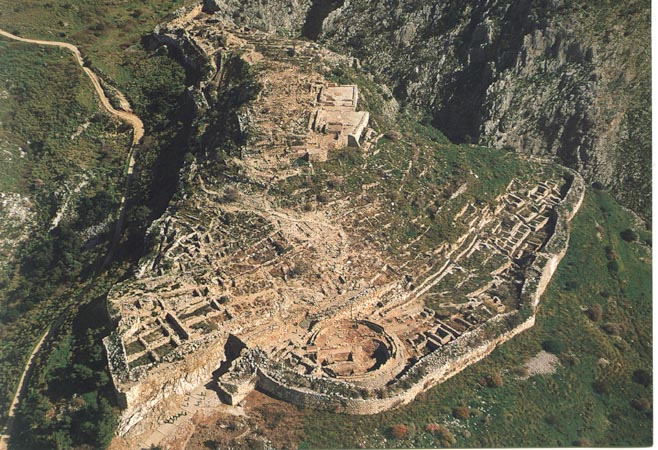
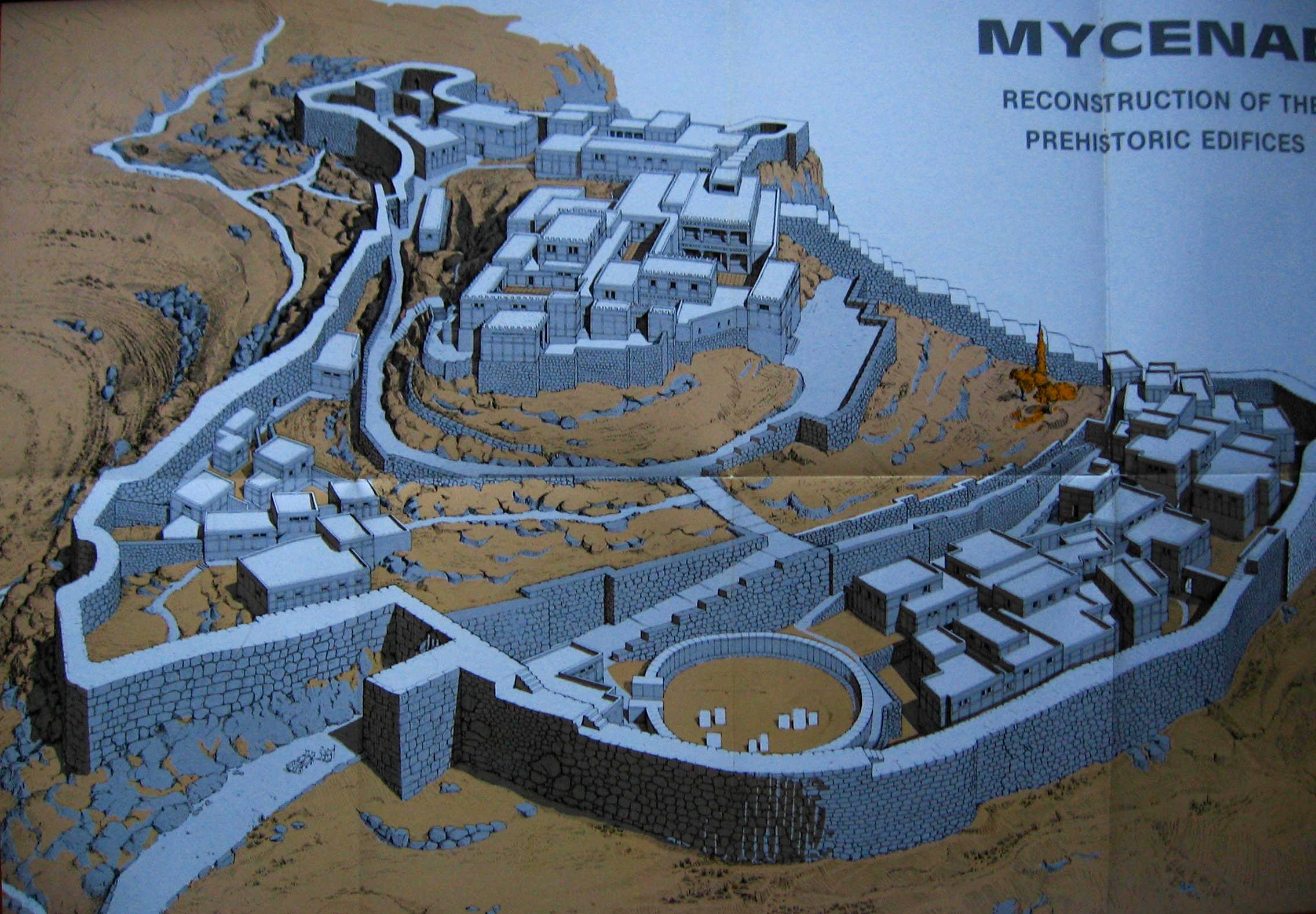
Mycenaean City
Mycenaean Map

Ancient Greece City States

Rather than consisting of a single united country or empire, ancient Greece was made up of a number of city-states. Each city-state, or polis, had its own government. At the center of each city-state was a powerful city which ruled the lands surrounding it. Sometimes it also ruled smaller less-powerful cities nearby. Some city states were monarchies ruled by kings or tyrants while others were oligarchies ruled by a few powerful men on councils. The city of Athens invented the government of democracy and was ruled by the people for many years.

The two most powerful and famous city-states were Athens and Sparta.

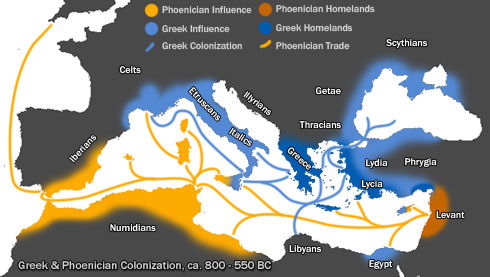
Areas of Ancient Greek Settlement and Trade

In the first half of the first millennium BCE, Greek city-states, most of which were maritime powers, began to look beyond Greece for land and resources.  Through trade and colonization, they spread the Greek way of life far and wide to Spain, France, Italy, the Adriatic, the Black Sea, and North Africa. In total, the Greeks established some 500 colonies which involved up to 60,000 Greek citizen colonists, so that by 500 BCE these new territories would eventually account for 40% of all Greeks in the Hellenic World.

Peloponnesian War

Increasing tensions and rivalry between Athens and Sparta led to the Peloponnesian War. The Peloponnesian War reshaped the ancient Greek world. On the level of international relations, Athens, the strongest city-state in Greece prior to the war's beginning, was reduced to a state of near-complete subjection, while Sparta became established as the leading power of Greece.

The economic costs of the war were felt all across Greece; poverty became widespread in the Peloponnese, while Athens found itself completely devastated and never regained its pre-war prosperity.

The Rise of Macedonia

The rivalry of Athens and Sparta was brought to an end a few decades later when Philip II of Macedon conquered all of Greece except Sparta. 

Although he is often only remembered for being the father of Alexander the Great, Philip II of Macedon (reigned 359 BCE - 336 BCE) was an accomplished king and military commander in his own right, setting the stage for his son’s victory over Darius III and the conquest of Persia. Philip inherited a weak, backward country with an ineffective, undisciplined army and molded them into a formidable, efficient military force, eventually subduing the territories around Macedonia as well as subjugating most of Greece. He used bribery, warfare, and threats to secure his kingdom. However, without his insight and determination, history would never have heard of Alexander.
Map of the territory of Philip II of Macedon

At Philip's Death

The Empire of Alexander the Great

Philip's son, Alexander the Great (356–323 BC), managed to briefly extend Macedonian power not only over the central Greek city-states, but also to the Persian empire, including Egypt and lands as far east as present-day Pakistan and the fringes of India.

Alexander helped spread the Greek culture through his vast empire. Although the empire fractured into multiple Hellenic regimes shortly after his death, his conquests left a lasting legacy.