Since the 16th century, pipe organs have used various materials for pipes, which can vary widely in timbre and volume. The pipes are divided into ranks and controlled by the use of hand stops and combination pistons.
The Mechanics
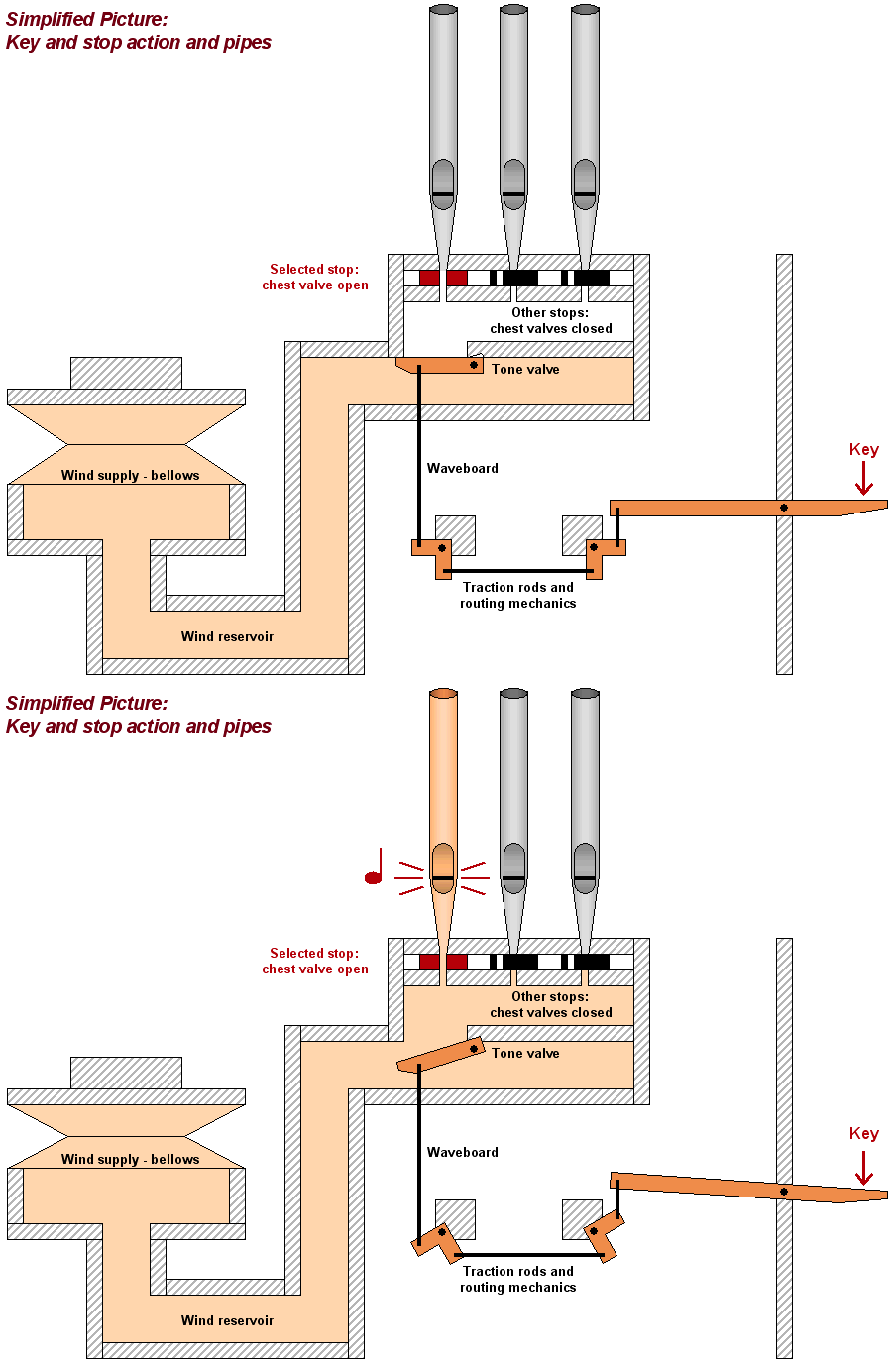
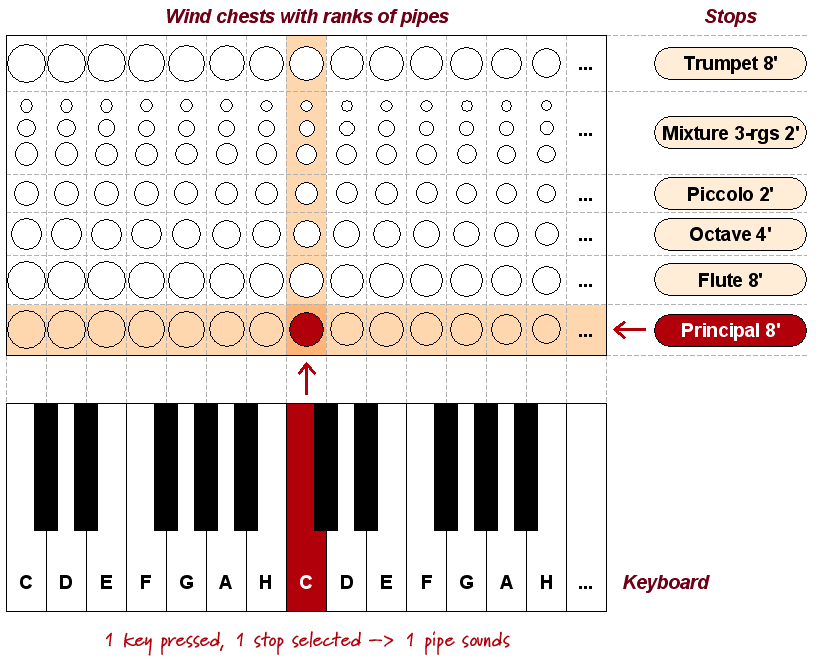
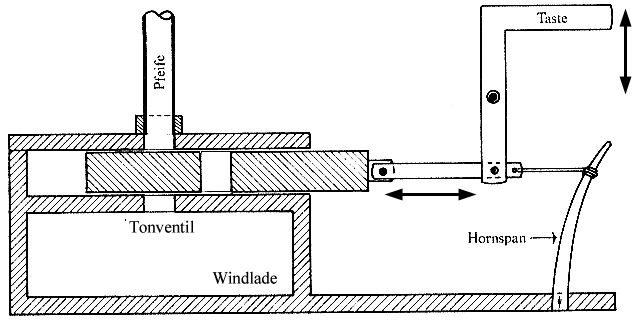
Below are an assortment of diagrams (one is even animated), all created to help illustrate the mechanics of how an organ works...


Tracker Organ
A Tracker organ uses tracker action - a term to indicate a mechanical linkage between keys or pedals pressed by the organist and the valve that allows air to flow into pipe(s) of the corresponding note. This is in contrast to (1) direct electric action which connect the key to the valve through an electrical link or (2) electro-pneumatic action which connect the key to an electrically assisted pneumatic system respectively, or (3) tubular-pneumatic action which utilizes a change of pressure within lead tubing which connects the key to the valve pneumatic.
Did You Know?
- The loudest organ stop in the world is the Grand Ophicleide located in the Right Pedal division of the Boardwalk Hall Auditorium Organ (see link below). It is described as having "a pure trumpet note of ear-splitting volume, more than six times the volume of the loudest locomotive whistle." The Grand Ophicleide produces up to 130 decibels at a distance of 1 meter. A former organ curator warned the stagehands when the Grand Ophicleide was going to be used, because of the volume.
- The air needed for the pipes to speak (usually called the "wind" by organ builders) used to be produced by people treading on or pumping up down on a lever to force wind into huge bellows on a side chamber of the organ. Today a blower worked by a huge electric motor has taken over this job, but the principle remains the same. Today a blower worked by a huge electric motor has taken over this job, but the principle remains the same.

Further Info
Pipe organ (Wikipedia)Tracker action (Wikipedia)
Organ stop (Wikipedia)
Boardwalk Hall Auditorium Organ (Wikipedia)
Lots of Organ Photos and Info


