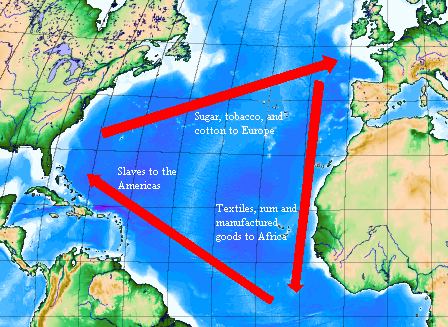
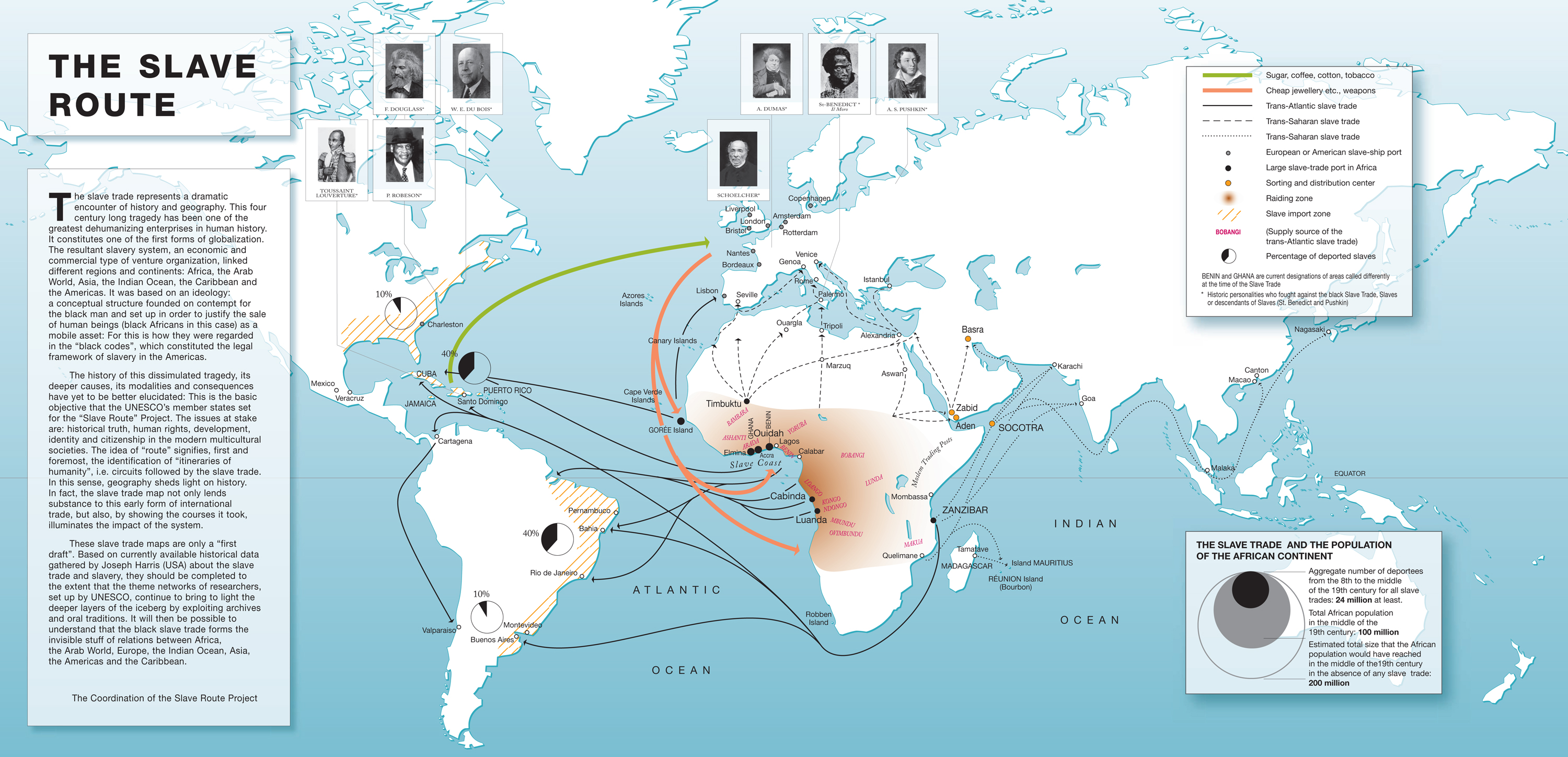
When we think of the enslavement of Africans, most of us connect it with Europeans and the well-known 18th Century triangle of trade:
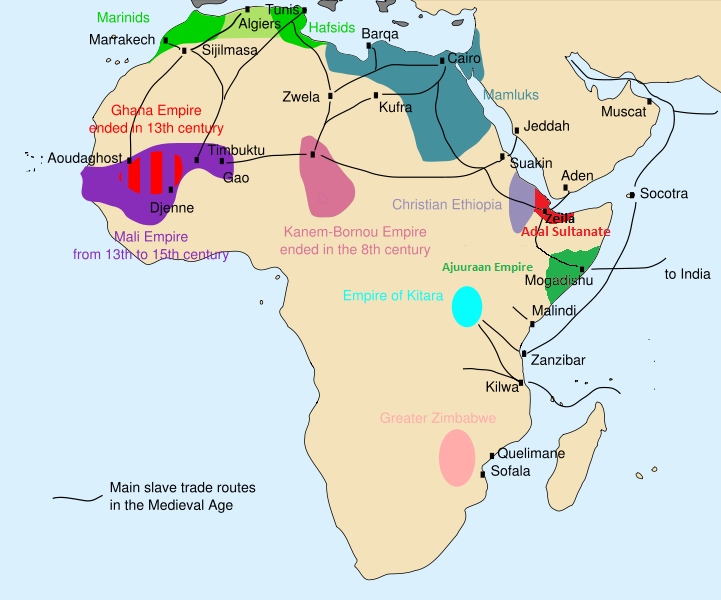
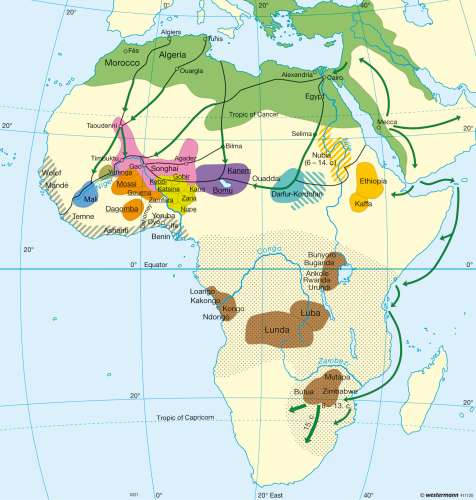
However for over 900 years, Africans were enslaved by Arabic slave traders. The Arab slave trade originated before Islam and historians estimate that between 650 and the 1960s, 10 to 18 million people were enslaved by Arab slave traders. Slaves were taken from Europe, Asia and Africa across the Red Sea, Indian Ocean, and Sahara desert.
During the ninth century Arab and Swahili traders on the Swahili Coast captured Bantu peoples (Zanj) from the interior in present-day Kenya, Mozambique and Tanzania and brought them to the coast.
Did You Know?
Slavery in the holy city of Mecca would remain until 1966 and in all other Arabic countries until 1990.
Zanj Rebellion
A series of slave uprisings known as the Zanj Rebellion took place between 869 and 883 AD near the city of Basra situated in present-day Iraq. The rebellion grew to involve over 500,000 slaves and free men who were imported from across the Muslim empire and claimed over "tens of thousands of lives in lower Iraq. The Zanj who were taken as slaves to the Middle East were often used in strenuous agricultural work.
Barbary Slave Trade
Arabs also enslaved Europeans. Between 1 million and 1.25 million Europeans were captured between the 16th and 19th centuries by Barbary corsairs, who were vassals of the Ottoman Empire, and sold as slaves. These slaves were captured mainly from seaside villages from Italy, Spain, Portugal and also from more distant places like France or England, the Netherlands, Ireland and even Iceland.
Often referred to as the Barbary slave trade, Barbary pirates raided ships and and coastal towns and men, women, and children were captured to such a devastating extent that vast numbers of sea coast towns were abandoned. Professor Robert Davis estimates that--from the beginning of the 16th century to the middle of the 18th--1 million to 1.25 million white Christian Europeans were enslaved in North Africa.
Once the New World was "discovered" and settled by white Europeans, the demographics changed. As Native Americans were wiped out and/or driven to extinction (as in the Caribbean islands), European colonists turned to Africa for slave laborers on the sugar and cotton plantations.