Showing posts with label Slavery. Show all posts

Saturday, January 5, 2019

How Slavery Expanded Across the United States

By the 1860s, the U.S. had an economic system that kept nearly 4 million people in bondage. Interestingly, a Coast Survey map created and compiled from the 1860 census depicted the percentage of the population enslaved in each county. Abraham Lincoln consulted it throughout the Civil War.
1861 Coast Survey Map
Wikimedia Commons

Slave labor was integral to the plantation economy of the south and of course cotton was one of its main products
.

The slave population  grew in intensity in places around the Chesapeake Bay, even as slavery was gradually abolished in the North. But for the most part the slave population spread westward to the lands opened for settlement by the Louisiana Purchase, the dispossession of the Indian nations of the Southeast, the war with Mexico, and the distribution of public lands. Slavery spread rather than grew because it was an agricultural rather than industrial form of capitalism, so it needed new lands.

The unceasing spread of slavery provoked political crises, eventually leading to the Civil War. As Abraham Lincoln put it in is 1858 "House Divided" speech:
"Either the opponents of slavery, will arrest the further spread of it, and place it where the public mind shall rest in the belief that it is in the course of ultimate extinction; or its advocates will push it forward, till it shall become alike lawful in all the States, old as well as new, North as well as South."

Sunday, November 15, 2015

Arab Slave Trade

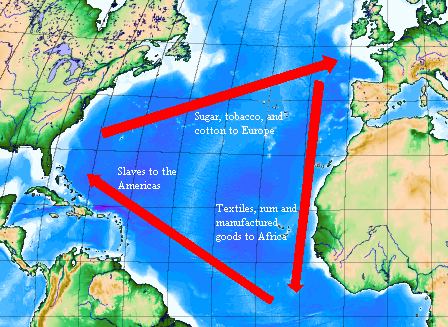
When we think of the enslavement of Africans, most of us connect it with Europeans and the well-known 18th Century triangle of trade:

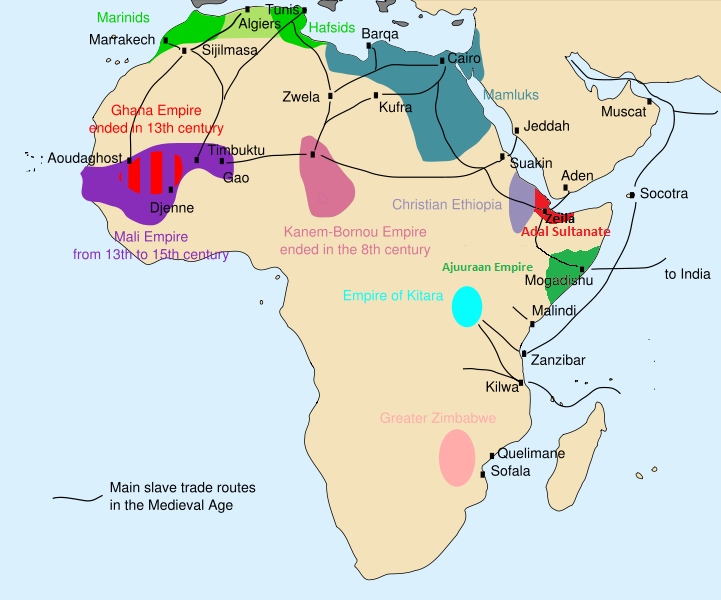
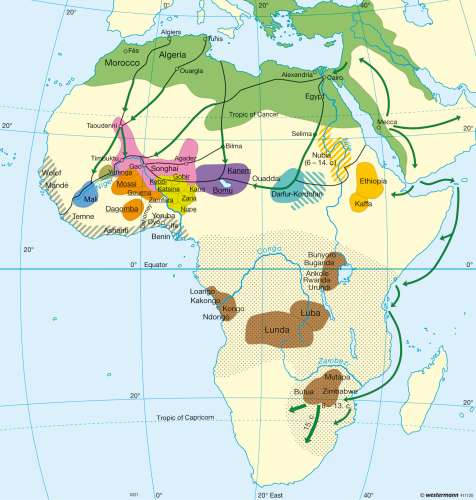
However for over 900 years, Africans were enslaved by Arabic slave traders. The Arab slave trade originated before Islam and historians estimate that between 650 and the 1960s, 10 to 18 million people were enslaved by Arab slave traders. Slaves were taken from Europe, Asia and Africa across the Red Sea, Indian Ocean, and Sahara desert.

During the ninth century Arab and Swahili traders on the Swahili Coast captured Bantu peoples (Zanj) from the interior in present-day Kenya, Mozambique and Tanzania and brought them to the coast.

Did You Know?
Slavery in the holy city of Mecca would remain until 1966 and in all other Arabic countries until 1990.

Zanj Rebellion

A series of slave uprisings known as the Zanj Rebellion took place between 869 and 883 AD near the city of Basra situated in present-day Iraq. The rebellion grew to involve over 500,000 slaves and free men who were imported from across the Muslim empire and claimed over "tens of thousands of lives in lower Iraq. The Zanj who were taken as slaves to the Middle East were often used in strenuous agricultural work.

Barbary Slave Trade

Arabs also enslaved Europeans. Between 1 million and 1.25 million Europeans were captured between the 16th and 19th centuries by Barbary corsairs, who were vassals of the Ottoman Empire, and sold as slaves. These slaves were captured mainly from seaside villages from Italy, Spain, Portugal and also from more distant places like France or England, the Netherlands, Ireland and even Iceland.

Often referred to as the Barbary slave trade, Barbary pirates raided ships and  and coastal towns and men, women, and children were captured to such a devastating extent that vast numbers of sea coast towns were abandoned. Professor Robert Davis estimates that--from the beginning of the 16th century to the middle of the 18th--1 million to 1.25 million white Christian Europeans were enslaved in North Africa.

Once the New World was "discovered" and settled by white Europeans, the demographics changed. As Native Americans were wiped out and/or driven to extinction (as in the Caribbean islands), European colonists turned to Africa for slave laborers on the sugar and cotton plantations.


Monday, January 26, 2015

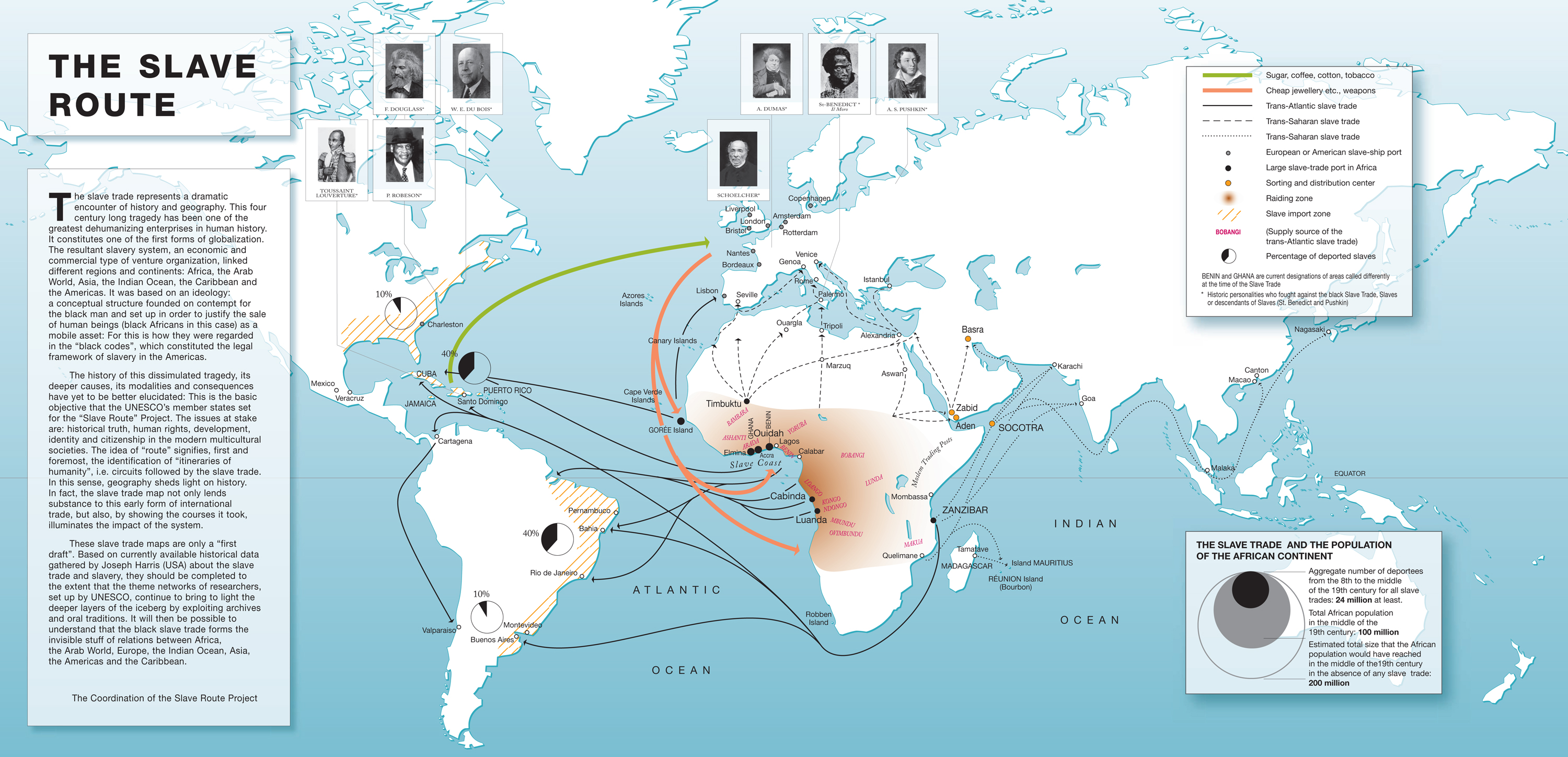
African Slave Trade - A Visual Quick Study

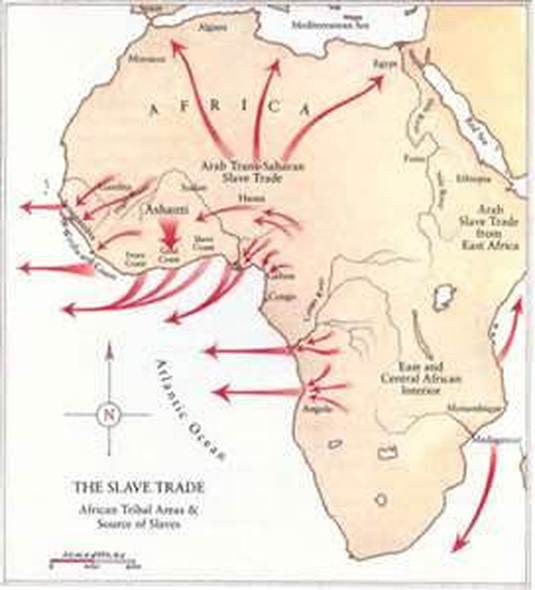
Between 1650 and 1860, approximately 10 to 15 million people were enslaved and transported form Western Africa to the Americas.  Of those transported, roughly 2 million died at sea.


Arabic Involvement - The Trans Saharan Slave Trade
Settlement by Ethnic Group U.S.A. 1755

Distribution of enslaved African Americans in 1850
U.S. Slave Concentration 1860

Domestic Slave Trade
Between 1790 and 1860, 835,000 slaves were moved from Maryland, Virginia, and the Carolinas to Alabama, Mississippi, Louisiana, and Texas.
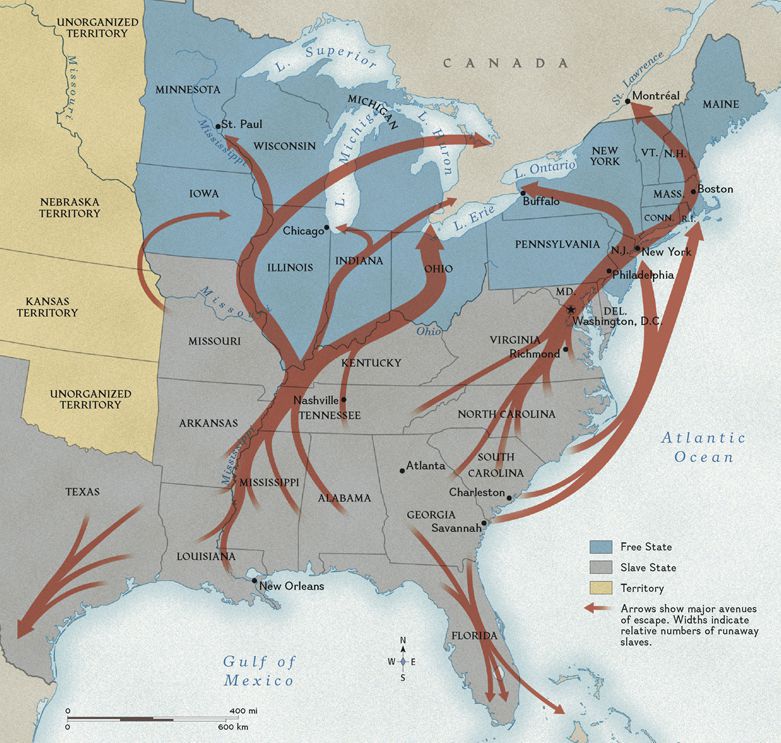
Domestic Slave Escape Routes 
 The "Underground Railroad"