Thursday, December 10, 2015

Visual Quick Study: Mycenaeans and Ancient Greece (Part One)

Beginnings - The Mycenaeans

The Mycenaeans were the first Greeks. The Mycenaean civilization thrived between 1650 and 1200 BC. The Mycenaeans were influenced by the earlier Minoan civilization, located on the island of Crete.

The catacalysmic eruption of Thera, which occurred around 1500 BC, resulted in the decline of the Minoan civilization of Crete. This turn of events gave the opportunity for the Mycenaeans to spread their influence throughout the Aegean. Around c. 1450 BC, they became the dominant power of the region. gaining control of Crete itself and colonizing several other Aegean islands reaching as far as Rhodes.
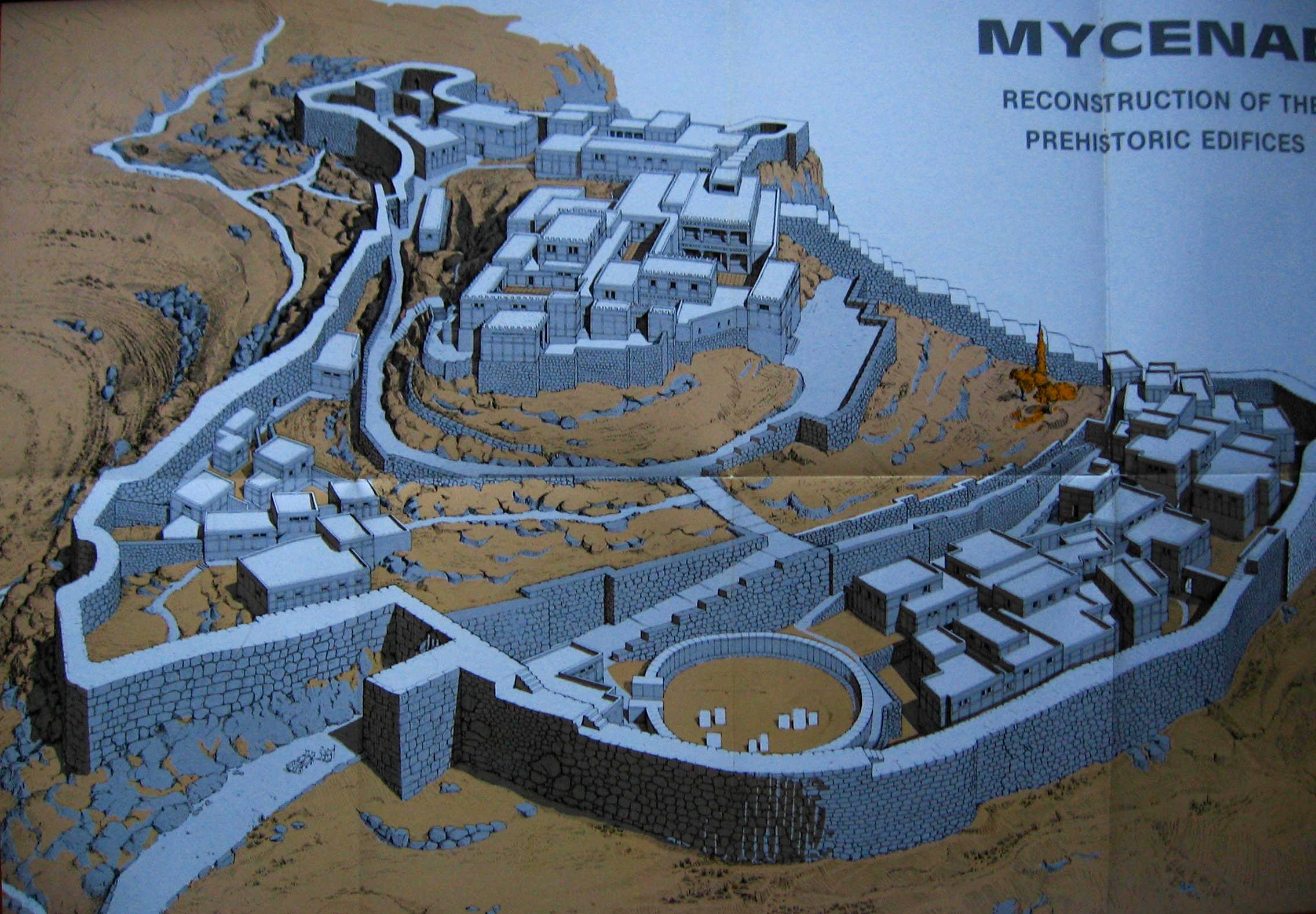
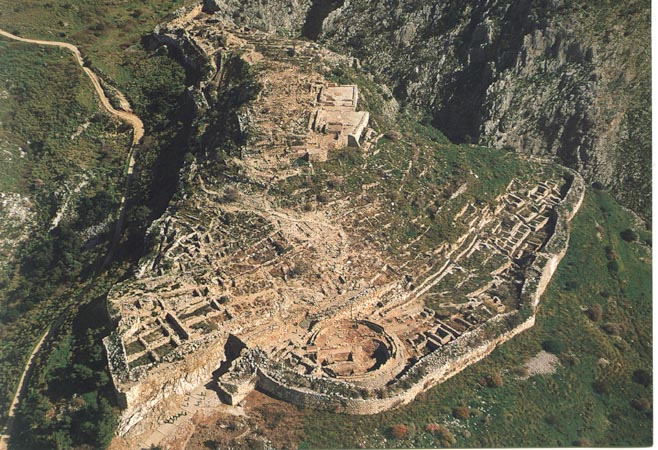
Mycenaean City
Mycenaean Map

Ancient Greece City States

Rather than consisting of a single united country or empire, ancient Greece was made up of a number of city-states. Each city-state, or polis, had its own government. At the center of each city-state was a powerful city which ruled the lands surrounding it. Sometimes it also ruled smaller less-powerful cities nearby. Some city states were monarchies ruled by kings or tyrants while others were oligarchies ruled by a few powerful men on councils. The city of Athens invented the government of democracy and was ruled by the people for many years.

The two most powerful and famous city-states were Athens and Sparta.

Areas of Ancient Greek Settlement and Trade

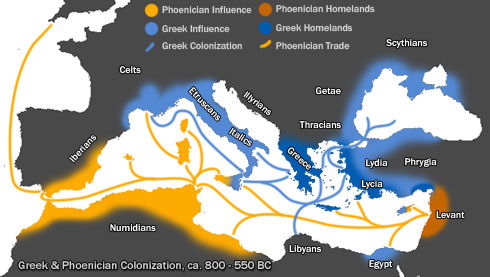
In the first half of the first millennium BCE, Greek city-states, most of which were maritime powers, began to look beyond Greece for land and resources.  Through trade and colonization, they spread the Greek way of life far and wide to Spain, France, Italy, the Adriatic, the Black Sea, and North Africa. In total, the Greeks established some 500 colonies which involved up to 60,000 Greek citizen colonists, so that by 500 BCE these new territories would eventually account for 40% of all Greeks in the Hellenic World.
Peloponnesian War

Increasing tensions and rivalry between Athens and Sparta led to the Peloponnesian War. The Peloponnesian War reshaped the ancient Greek world. On the level of international relations, Athens, the strongest city-state in Greece prior to the war's beginning, was reduced to a state of near-complete subjection, while Sparta became established as the leading power of Greece.

The economic costs of the war were felt all across Greece; poverty became widespread in the Peloponnese, while Athens found itself completely devastated and never regained its pre-war prosperity.

The Rise of Macedonia

The rivalry of Athens and Sparta was brought to an end a few decades later when Philip II of Macedon conquered all of Greece except Sparta. 

Although he is often only remembered for being the father of Alexander the Great, Philip II of Macedon (reigned 359 BCE - 336 BCE) was an accomplished king and military commander in his own right, setting the stage for his son’s victory over Darius III and the conquest of Persia. Philip inherited a weak, backward country with an ineffective, undisciplined army and molded them into a formidable, efficient military force, eventually subduing the territories around Macedonia as well as subjugating most of Greece. He used bribery, warfare, and threats to secure his kingdom. However, without his insight and determination, history would never have heard of Alexander.
Map of the territory of Philip II of Macedon

At Philip's Death

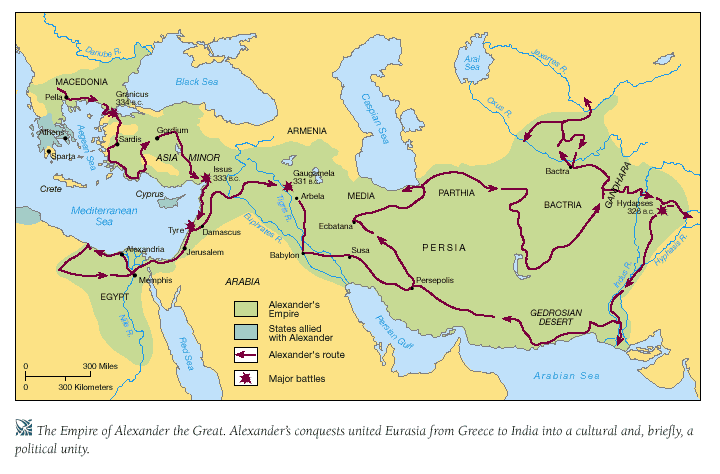
The Empire of Alexander the Great

Philip's son, Alexander the Great (356–323 BC), managed to briefly extend Macedonian power not only over the central Greek city-states, but also to the Persian empire, including Egypt and lands as far east as present-day Pakistan and the fringes of India.

Alexander helped spread the Greek culture through his vast empire. Although the empire fractured into multiple Hellenic regimes shortly after his death, his conquests left a lasting legacy.

Friday, December 4, 2015

Mapping International and Domestic Terrorism

Terrorism and sabotage seems to occur on an almost daily basis across the world with ever increasing frequency. Terrorist attacks are now sadly part of our contemporary landscape and regarded as a foreseeable yet analyzable business risk.

U.S. Terror History Map

The Investigative Project on Terrorism


Active Global Terrorist Organizations


Map of Islamic Terrorism


Mapping Militant Organizations

Stanford University - The Mapping Militants Project identifies patterns in the evolution of militant organizations in specified conflict areas and seeks to discover the causes and consequences of their evolution.


The plague of global terrorism

The number of deaths from terrorism nearly doubled in 2014


Wednesday, November 25, 2015

Democratic and Republican Ideology Shift?

Did You Know?

The Democratic and Republican Parties have undergone a long transition from their founding ideological principles. It’s hard to believe these days but the Democrats started out as the conservative party and the Republicans were once the liberal party!

The Democratic Party we know today evolved from the conservative Democratic-Republican Party of the 1790s. Prior to the Cil War and during the Reconstruction, Republicans elected Abe Lincoln. and were long known as advocates for the abolitions of slavery, etc.

The 1896 Election was the first turning point when tthe country was mired in an economic depression and Democratic Party took a leap of faith to abandon their conservative orthodoxy and nominated  populist William Jennings Bryan. He was the first liberal to win the Democratic Party Presidential nomination. This represented a radical departure from the conservative roots of the Democratic Party.

In response to the nomination of “liberal” Bryan by the Democrats, the Republican Party countered by straying away from its liberal leanings and nominated the moderate-conservative Ohio Governor William McKinley.

In 1912, the Progressive former President Theodore Roosevelt challenged the more conservative incumbent President William Howard Taft for the Republican Party nomination.  Roosevelt, who won nine Republican primaries, bolted the party and formed the Progressive Party, a.k.a. the Bull Moose Party, and won 86 electoral votes in the General Election. Taft won just eight Electoral Votes. The Democratic nominee, New Jersey Governor Woodrow Wilson, mustered 435 Electoral votes and won the Presidential Election in a landslide victory.

Timelines

Polarization


Further Info


Saturday, November 21, 2015

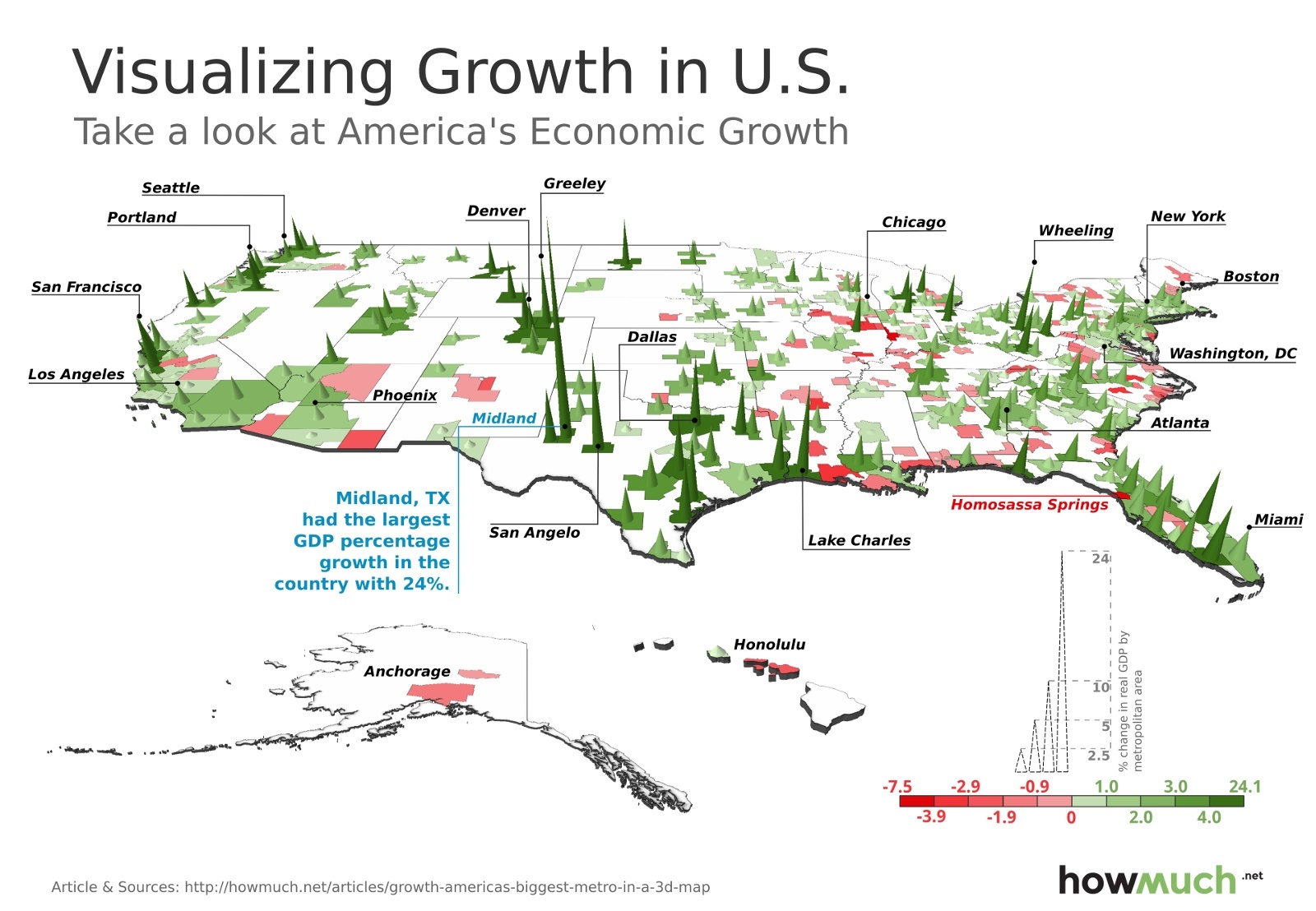
Mapped in 3D - America’s Economic Growth

Where U.S. Metro Economies Are Growing or Shrinking

3D Map

Article >

GDP growth increased 2.3% in 2014 as compared with 1.9% growth in 2013. The industry with the highest growth was professional and business services,

Additional Info on the Map >

Sunday, November 15, 2015

Arab Slave Trade

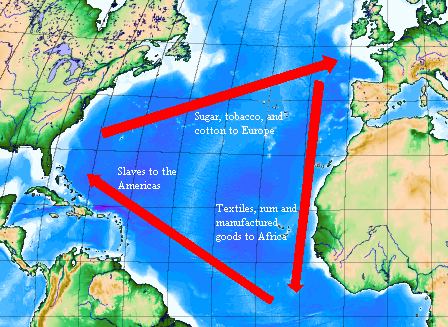
When we think of the enslavement of Africans, most of us connect it with Europeans and the well-known 18th Century triangle of trade:

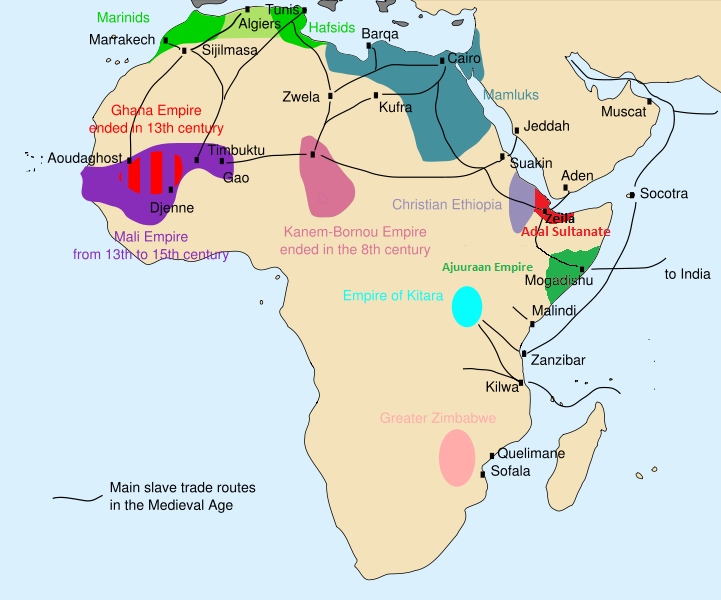
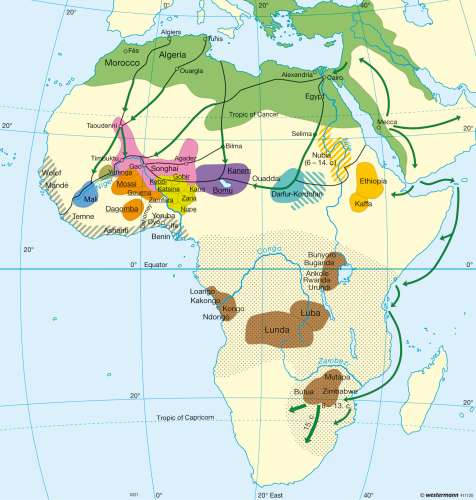
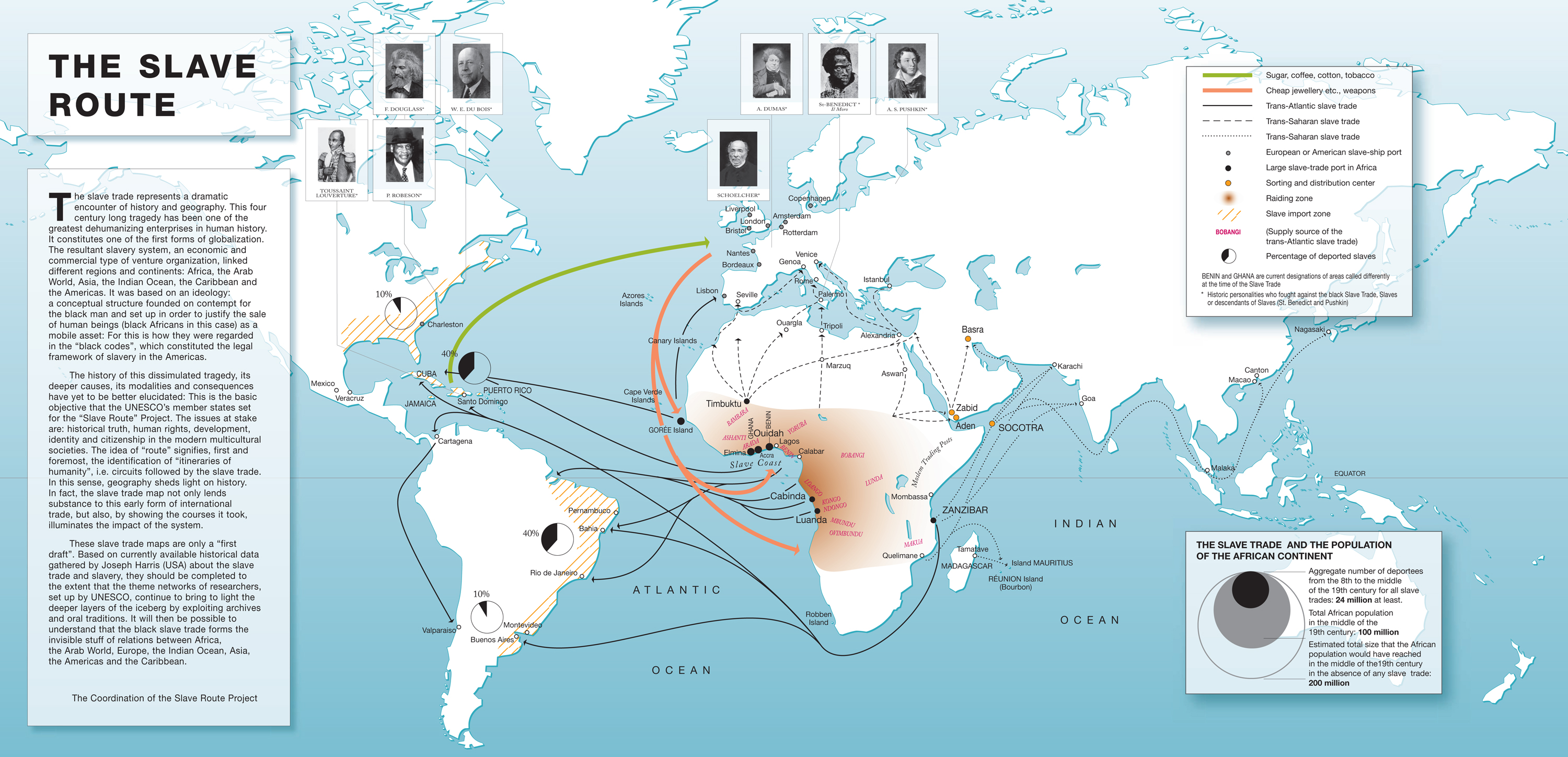
However for over 900 years, Africans were enslaved by Arabic slave traders. The Arab slave trade originated before Islam and historians estimate that between 650 and the 1960s, 10 to 18 million people were enslaved by Arab slave traders. Slaves were taken from Europe, Asia and Africa across the Red Sea, Indian Ocean, and Sahara desert.

During the ninth century Arab and Swahili traders on the Swahili Coast captured Bantu peoples (Zanj) from the interior in present-day Kenya, Mozambique and Tanzania and brought them to the coast.

Did You Know?
Slavery in the holy city of Mecca would remain until 1966 and in all other Arabic countries until 1990.

Zanj Rebellion

A series of slave uprisings known as the Zanj Rebellion took place between 869 and 883 AD near the city of Basra situated in present-day Iraq. The rebellion grew to involve over 500,000 slaves and free men who were imported from across the Muslim empire and claimed over "tens of thousands of lives in lower Iraq. The Zanj who were taken as slaves to the Middle East were often used in strenuous agricultural work.

Barbary Slave Trade

Arabs also enslaved Europeans. Between 1 million and 1.25 million Europeans were captured between the 16th and 19th centuries by Barbary corsairs, who were vassals of the Ottoman Empire, and sold as slaves. These slaves were captured mainly from seaside villages from Italy, Spain, Portugal and also from more distant places like France or England, the Netherlands, Ireland and even Iceland.

Often referred to as the Barbary slave trade, Barbary pirates raided ships and  and coastal towns and men, women, and children were captured to such a devastating extent that vast numbers of sea coast towns were abandoned. Professor Robert Davis estimates that--from the beginning of the 16th century to the middle of the 18th--1 million to 1.25 million white Christian Europeans were enslaved in North Africa.

Once the New World was "discovered" and settled by white Europeans, the demographics changed. As Native Americans were wiped out and/or driven to extinction (as in the Caribbean islands), European colonists turned to Africa for slave laborers on the sugar and cotton plantations.


Tuesday, November 10, 2015

1924 Rand McNally New York State Map

Awesome maps showing New York State railroads, interurbans and canal lines in 1924.
Great site - tons of material!

David Rumsey Historical Map Collection

Connecticut Railroad Valuation Maps

The University of Connecticut (uConn) and the Connecticut State Data Center (CTSDC) have done a wonderful job of providing access to a large series of 1915 New York, New Haven and Hartford Railroad Valuation Maps.

The Google-Driven interactive map to navigate through this series is truly a work of art!

I have colorized a few map selections of locations I am somewhat familiar with (and partial too :-) ). Click on any image to enlarge.

Trumbull - Along the Rail Trail

The Dam near the Tait's Mill Ruins
Ice House and Trumbull Pond 
Long Hill Station 

 Springdale, CT

There once was a station at the cemetery!

Springdale Station and Industrial Spurs

Newtown-Southbury


Echo Valley Road near Cavanaugh Pond


Pomperaug River Railroad Bridge - Southbury